









Finding out that your home insurance provider is cancelling your policy or not renewing it at the end of your term is stressful — after all, home insurance is an indispensable tool when it comes to protecting your property, belongings and assets against damage, theft and liability.
So, why do insurers choose to cancel policies and if it happens to you, what can you do to maintain coverage?
We reviewed provincial Insurance Act legislation, information from associations like the Insurance Bureau of Canada, the Chambre de l’assurance de dommages and the Centre for Study of Insurance Operations and media reports to help homeowners understand why a home insurance policy might get cancelled, what steps to take if this happens and how a cancellation can affect future insurance applications and your mortgage.
Can My Insurance Company Cancel My Policy Without Warning?
Insurers generally cannot cancel a home insurance policy without notice, but the required notice period and delivery method vary by province and policy. In Ontario, the statutory conditions generally require 15 days’ notice by registered mail, or 5 days’ written notice when delivered personally or by a permitted alternative method. Check the rules in your province and the cancellation notice itself.
Non-renewal notice requirements also vary by province and policy. Check the notice you receive and your province’s insurance legislation so you know how much time you have to find replacement coverage.
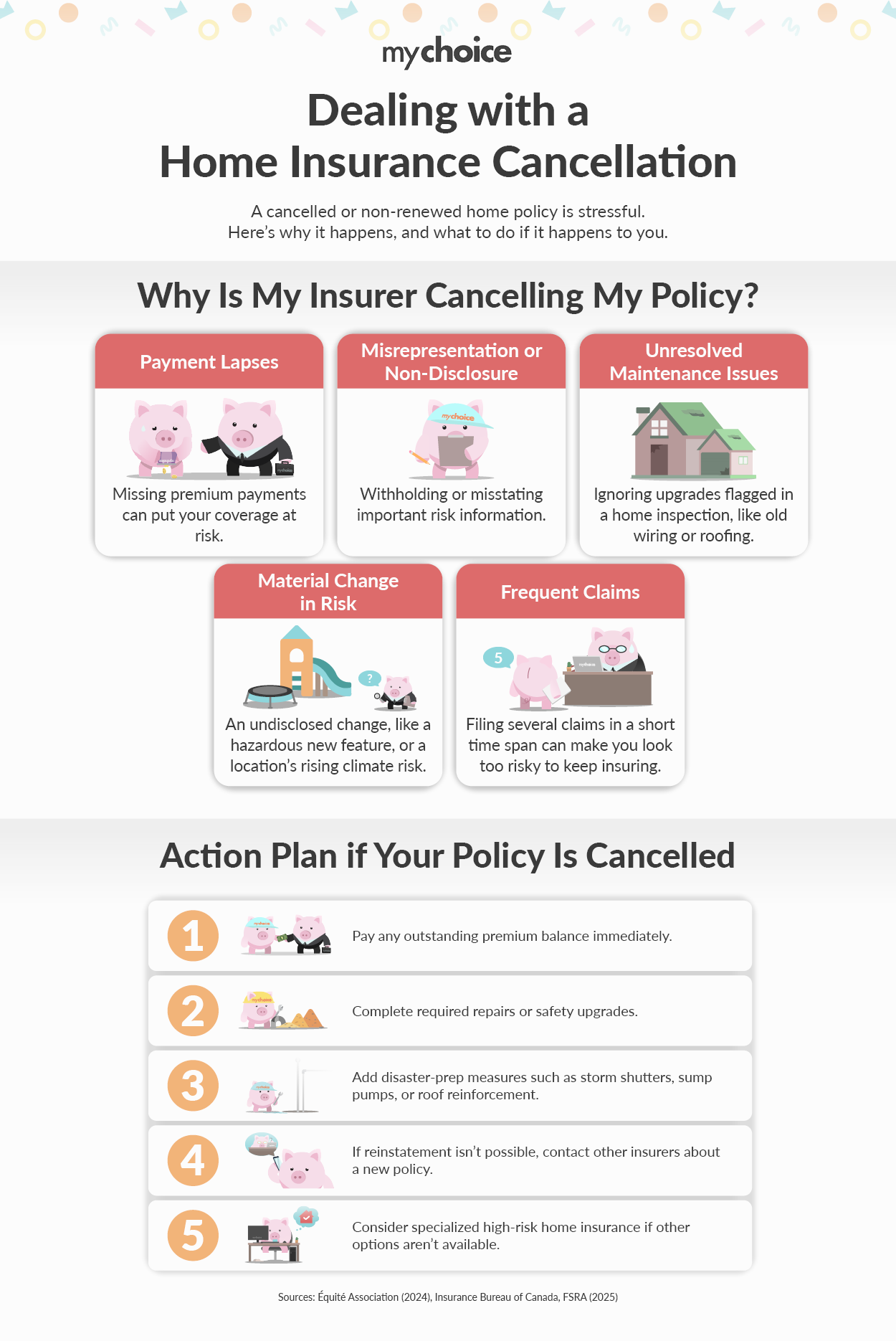
Why Is My Insurer Cancelling My Policy?
Your home insurance can be cancelled for a few reasons, including:
Can I Stop the Cancellation?
Depending on the reason for the cancellation, it may be possible to reverse it. Your first stop will be to contact your insurer or broker and ask them to clarify in writing why your policy is being cancelled or not renewed.
In some cases, the insurer may give you a grace period to meet certain criteria before the cancellation becomes final.
Action Plan if Your Home Insurance Has Been Cancelled
If your home insurance is being cancelled, it’s important to act fast to avoid a lapse in coverage. Once you know why your policy is being cancelled or not renewed, you can try to appeal to your existing insurer for a chance to remedy the situation. For example:
If these actions aren’t enough to reinstate your policy or if the insurer’s deadline has passed, there are other steps you can consider, like:
- Catching up on outstanding premium balances right away
- Making the required safety improvements to reduce risk, whether upgrading outdated elements, completing overdue maintenance, removing hazardous features or investing in additional safety or security measures
- Installing disaster preparedness measures, like storm shutters, sump pumps or reinforcing your roof
If these actions aren’t enough to reinstate your policy or if the insurer’s deadline has passed, there are other steps you can consider, like:
- Contacting other insurance companies about getting a new policy, every insurance company has different underwriting processes.
- If you can’t change your risk profile, specialized high-risk home insurance policies are also available but are typically more expensive than standard policies.
What Happens to My Mortgage If My Home Insurance Is Cancelled?
If your mortgage lender is listed on the policy, it may receive notice when coverage is cancelled or materially changed, depending on the policy terms. Because lenders generally require homeowners to maintain insurance, contact your lender and arrange replacement coverage immediately if your policy is cancelled.
If you can’t provide proof of insurance within a specific timeframe, they’ll put their own coverage in place, called ‘force-placed insurance,’ which is more expensive than standard home insurance coverage and only covers the mortgage lender’s interest in the property.
Will a Cancellation Make My Next Home Insurance Policy More Expensive?
An insurer’s decision to cancel your home insurance can make your next home insurance policy more expensive.
If you’ve had missed premium payments or many claims filed in a short period of time, future insurers will likely consider your property riskier to insure, which will lead to higher premiums or limits on coverage.
Over time, taking some of the steps above (completing required repairs, not missing payments or having fewer claims) can help you rebuild toward standard rates.
How Long Does a Home Insurance Cancellation Stay on My Record?
Insurers share claims and cancellation information via databases, and depending on the reason for your cancellation, this information can stay on your record for up to six years.
Applications for new insurance will also generally include a section asking whether, in the past five years, any insurance company has “declined, cancelled, refused or indicated an intent not to renew” a home insurance policy as well as their reason. It is important to be honest and self-disclose any cancellations when you’re applying for a new policy.