









Regular maintenance helps reduce risks associated with fire, water, weather-related or other hazards to property and liability. That said, maintenance doesn’t necessarily mean losses will be covered. That depends on many factors, including your policy wording, exclusions, conditions, facts, circumstances and the cause of loss.
For this update, our editorial team reviewed the federal guide to home insurance for unexpected events, Insurance Bureau of Canada's water-damage prevention guide, Health Canada's home fire-safety guide, and Health Canada's carbon-monoxide prevention guide.
What Home Maintenance Matters Most for Insurance?
Controlling water around the foundation, detecting leaks, and ensuring drainage and sump systems are in proper working order.
Servicing furnaces and other fuel-burning appliances, testing smoke detectors, correcting signs of electrical problems, removing hazardous limbs and trees, maintaining roofs, and keeping walkways in good repair all reduce the chance of major losses from fire and other hazards.
Why Your Insurer Cares About House Maintenance
Home insurance won’t pay for normal home maintenance, like replacing old, worn-out roof shingles. Insurance pays for damage caused by a covered unexpected event. It may not pay to replace worn-out items, cover gradual deterioration, or cover losses caused by inadequate maintenance. Sometimes, a single instance of damage includes both insurable and uninsurable items.
When applying for home insurance, an insurer may ask about various aspects of your home’s condition. This may include questions about the condition of your roof, electrical, plumbing and heating systems. An insurer may also consider past insurance claims, safety devices, and whether the house is a primary or second home. Not all insurers ask for this information, and not all use this information the same way.
Insurers sometimes inspect homes before insuring them, though this doesn’t happen with every house.
Can You Be Denied a Claim for Poor House Maintenance?
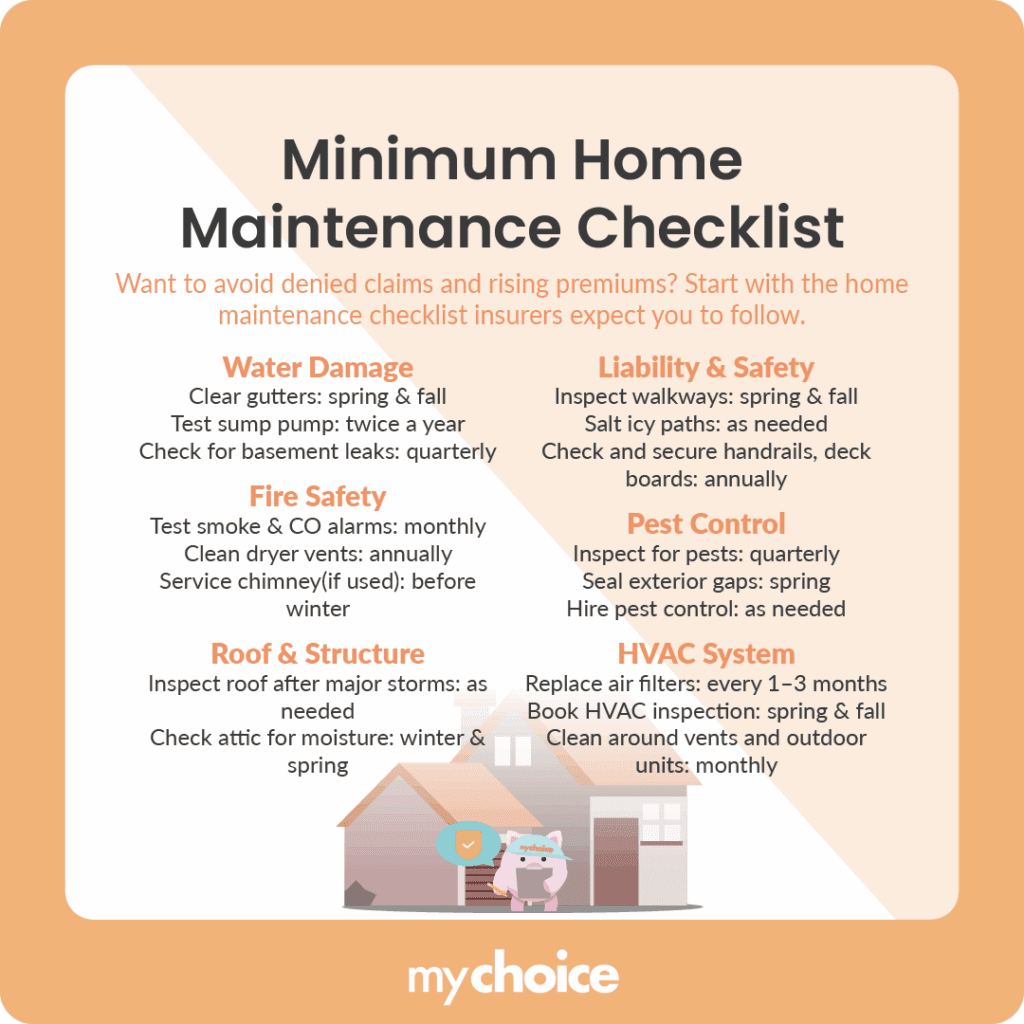
Claims can be denied, or payouts reduced, if the property insurance policy doesn’t cover the loss, the loss falls under policy exclusions, or the loss results from a breached condition. But a claim's outcome isn’t always cut-and-dried.
For example, while the cost to fix a worn-down roof may be the homeowner’s responsibility, storm-related damage to the interior may be covered. Ultimately, it depends on the exact language in the insurance policy and the evidence to support it.
Report active damage promptly and take reasonable steps to prevent it from getting worse when it is safe to do so. Keep damaged materials until the insurer permits disposal. Photographs and maintenance records help establish the condition and timeline, but they do not guarantee coverage.
Maintenance Checklist to Prevent Claims by Category
Water and Foundation
Check plumbing fixtures for leaks, appliance hoses for wear or deterioration, the basement for signs of moisture, drainage for clogs, and the grade around your home. Make sure eavestroughs and downspouts are not clogged with debris or draining toward the house.
Check your drainage year-round, especially before heavy rain or periods of thawing.
Call a plumber or drainage professional if you notice any problems or defects.
Clean and maintain eavestroughs at least once a year.
Make sure downspouts direct water at least six feet away from the basement.
Test your sump pump, sewer-backup system and other equipment according to the manufacturer’s instructions. This includes ensuring nothing obstructs the discharge and checking any backwater valves.
Test your sump pump before the wet season and after a malfunction or power failure.
A qualified, experienced contractor should install and maintain sump pumps, sewer-backup sump pumps, backwater valves and related systems, and ensure they comply with applicable laws and regulations.
Fire and Heating
Test your smoke alarms each month, and replace any that are more than 10 years old.
Test your carbon-monoxide detector’s battery and replace it according to the manufacturer’s instructions.
Have fuel-burning appliances inspected once a year, or at the manufacturer’s recommended intervals, by a qualified and experienced professional.
If you have a wood-burning fireplace, have your chimney cleaned once a year.
Clean or replace furnace filters as recommended by the manufacturer.
Look for signs that may indicate your furnace needs professional service, such as strange noises, visible soot around the furnace, short cycling, cracked vents or insufficient heating.
After a snowstorm, check outside vents for blockages.
Roof
Visually inspect your property for obvious damage or defects, such as missing shingles, ceiling or wall stains, blocked ventilation, sagging gutters, tree limbs or storm damage. Inspect from the ground or from within your home.
Leave roof inspections to a qualified roofer, especially when it comes to clearing ice dams. Hire a professional arborist to clear large branches and trim trees, especially near power lines.
Electrical Systems
Call an electrical contractor if you notice any problems or defects. Do not remove an electrical-panel cover or attempt wiring repairs.
Stop using equipment if it shows signs of a problem, such as tripping the circuit breaker. Other signs include discoloured plugs and outlets, flickering or dimming lights, warm outlets, buzzing, and damaged cords or plugs.
Walks, Decks and Outdoor Areas
Check the condition of steps, decks, railings, walks, exterior lights, gates, pools, garden hoses, lawn equipment and tools. Address any defects.
Read More: See Why a Necessary Roof Replacement Should Not Be Delayed
Use Your Quote Data to Prioritize the Checklist
MyChoice looked at thousands of home insurance quotes collected through the MyChoice platform since the beginning of 2026.
Quotes issued when the home’s roof was more than 21 years old had premiums that were 7.3% higher on average in Toronto, and 8.6% higher on average in Sudbury, compared to quotes where the roof was 11 to 20 years old. Sump pumps were mentioned in 45.9% of quotes issued in Sudbury and 56.1% of quotes issued in Windsor, while backwater valves were mentioned in 19.1% and 16.6% of those quotes, respectively.
Keep in mind these are just details we’ve seen on quotes and may or may not affect your premium or claims. Make sure your insurer has accurate information on file about your home, ask them to make updates if needed, and keep records of repairs and maintenance.
A Seasonal Schedule for a Canadian Home
Spring: Inspect winter damage from the ground, check the attic and basement for moisture, test sump and backup systems, clear drainage paths, and review decks, steps and railings after freeze-thaw.
Summer: Address grading and exterior seal defects, arrange roof or tree work in safe conditions, inspect pool barriers and review the inventory of major building updates.
Fall: Service heating and fuel-burning equipment as required, clean a wood-burning chimney, check hoses and shutoffs, clear eavestroughs, and review winter absence or freezing conditions in the policy.
Winter: Keep exterior exhaust vents clear after snow, manage walking surfaces, watch for condensation and pipe-freezing risk, and use a qualified contractor for roof snow, ice dams or inaccessible damage.
Read More: Read the Furnace Maintenance and Repair Guide
If You Find Active Damage or a Safety Warning
Protect people before you protect your house.
For smoke, fire, a carbon-monoxide alarm or a suspected gas leak, leave the home and call emergency services or the responsible utility from outside.
For a water leak, shut off the water only if the valve is safely accessible. Avoid standing water near electrical equipment and call the appropriate emergency contractor. Prevent further damage only when it does not create an electrical, structural or contamination risk.
For emergency repairs, preserve evidence of the damage for the insurer to inspect. Photograph the source, affected areas and damaged property, and record when you found it, what you did to mitigate the loss, and which professionals attended.
Notify the insurer or broker promptly when a claim may be involved. Ask what emergency work is authorized and what items must be kept.
Read More: Learn How to Detect a Gas Leak at Home
Before Leaving the Home
- Carefully read policy wording relating to absence, vacancy and heating or freezing clauses. The frequency of visits and precautions will vary from policy to policy, so follow the instructions in your policy.
- Advise the insurer of extended absences, vacancy or material changes to the use or occupancy of the property.
- Arrange for a responsible, reliable person to check the home, and ask them to note each visit.
- Leave the heat on and drain or shut off the water where required by the policy wording or conditions.
Keep a Useful Maintenance Record
Note the date, location, condition and corrective action taken, not just “checked.” Keep copies of contractor reports, building permits, invoices, warranties, owner’s manuals and photos.
Notify your insurer after extensive remodelling, heating-system modifications, roof replacement, changing the use of the house to a rental, leaving your house empty for an extended period, or any other change your insurer requires you to disclose.
Read More: Read What to Do About Home Insurance Claim Delays