









Whether it’s something fun, like a pool or hot tub, or a more functional addition, like an outdoor wood-burning boiler, installing backyard features can be a great way to get the most out of your property.
But whether you’re looking to upgrade your yard or doing your due diligence on a new home that has some of these elements, knowing the insurance implications of outdoor features is a must when it comes to making sure you’re covered.
To prepare this guide, our editorial team reviewed guidance from the Financial Services Regulatory Authority of Ontario (FSRA), municipal bylaws governing common backyard features, the Technical Standards and Safety Authority (TSSA) requirements for fuel oil tanks and fuel-burning appliances, and publicly available safety recommendations from the Government of Canada. We also reviewed how Canadian home insurers commonly assess backyard features during the underwriting process to explain how pools, hot tubs, trampolines, fire features and other outdoor additions can affect your property insurance coverage, liability exposure and premiums.
Which Features Hit Homeowners the Hardest
Fun Backyard Features:
| Feature | Risk |
|---|---|
| Swimming pools | Liability risk from slips and falls, drowning and other accidents. Structural risk from leaks. |
| Trampolines | Risk of injury |
| Hot tubs | Risk of electrocution, bacterial issues, liability risk from overheating, slips and falls and drowning |
| Wood-burning firepits/chimineas | Risk of fire, property damage, liability risk from burn injury, smoke exposure |
| Ponds & water features | Stagnant water risks, liability risk due to drowning |
| Play structures | Risk of falls and injury |
Functional backyard features:
| Feature | Risk |
|---|---|
| Home heating oil tanks (above or underground) | Risk of leaking, soil contamination |
| Wood burning appliances (outdoor wood-fired boiler) | Fire risk, smoke exposure |
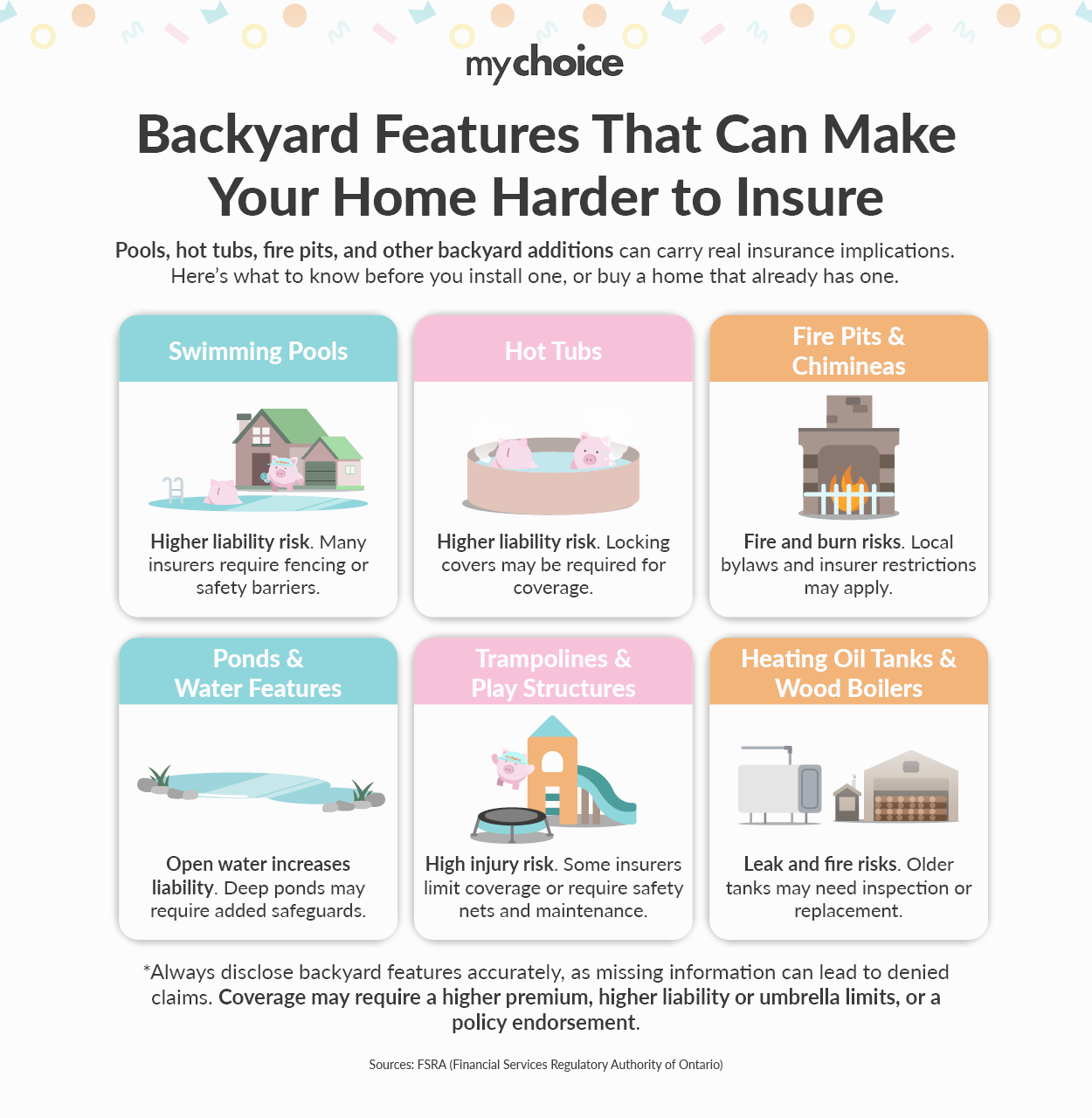
How Backyard Features Affect Your Property and Liability Risk
From a home insurance perspective, some backyard features pose structural risks to your property because of potential flooding, fire or environmental contamination. But even more significantly, many also carry significant liability risk.
As a result, it’s important to clarify whether your feature is covered under your policy, if there are any exclusions for add-ons, such as pool diving boards, for example, and the safety requirements set out by municipalities and insurers.
In many cases, when you disclose and install the necessary safety measures, you may:
- face a monthly premium increase
- have the option of adding higher personal liability or umbrella coverage, or
- be able to add optional endorsements or a rider to your policy, depending on the feature.
However, coverage and exclusions vary by insurance provider — if your insurer considers your backyard feature too risky or you haven’t followed the rules, you may face policy limitations or denials.
Homeowner Responsibilities When it Comes to Backyard Features
Many features, like pools and hot tubs, are covered under your standard home insurance policy from a liability perspective — but homeowners’ duty of care to anyone entering their property is extremely high.
As such, insurers require homeowners to comply with municipal safety criteria and regulations to maintain coverage and to ensure equipment is safe and secure, for example:
- Most municipalities require backyard pool owners to install several safety features to comply with the law and to be eligible for insurance coverage. For example, in the City of Hamilton, pool owners have to install and maintain a fence of at least 1.5 metres around pools, along with a self-latching gate with a lock on the inside.
- When we dug into the rules, it was clear that in many municipalities, regulations are similar for certain water features. In Penticton, B.C., for example, ponds deeper than two feet are subject to the same safety requirements as pools.
- In some communities, hot tubs also require an enclosure but may be exempt if they have covers that lock.
- Insurers vary on whether they cover backyard trampoline use in standard insurance policies or not, according to legal sources, as well as the safety standards required of homeowners — with some insurers insisting on enclosures, locked gates and safety nets. The Government of Canada suggests safety tips such as using a trampoline safety net, allowing two metres of clearance around the sides and eight metres overhead.
- Many cities, like Toronto, prohibit open-air burning in urban areas, including the use of backyard wood-burning fire pits and chimineas. In places where these are permitted, homeowners must meet several conditions, including the distance of the fire from the property line, hours you can use the fire pit and specific fire device and spark screen criteria. Gas-powered outdoor fireplaces must be certified by the Technical Standards and Safety Authority (TSSA).
Backyard features that are heat sources come with strict maintenance and inspection regulations to ensure their safety.
- Outdoor wood boilers or furnaces, for example, which may feature on rural properties, require a Level 1 WETT (Wood Energy Technology Transfer) inspection report for insurance purposes, to evaluate whether it is compliant with codes and safety standards.
- If you have a home with an above-ground fuel oil/heating oil tank in the backyard, or you’re considering buying a property with one, you’re required to have a ULC-approved tank inspected each year by a TSSA-certified technician to ensure it is in good condition. Your insurer may request copies of the inspection report.
In reviewing the TSSA rules, we found that they require all underground tanks in Ontario to be registered. If you have an unused tank, you’ll need to have it removed.
In some cases, insurers may consider oil tanks too risky to insure, but some offer endorsements that cover the cost of cleaning and decontaminating soil and property damage, for example.
Why Disclosure is Key
What if you already have a trampoline or a hot tub? As a homeowner, making sure your insurer has accurate information about your backyard features is essential to ensuring you have adequate coverage. According to FSRA, it’s your responsibility to disclose full information about your home’s value and contents on your home insurance application.
If you submit inaccurate information during the application process, this can lead to a rejection of claims.
What to Do if You’re Declined or Not Renewed
Unfortunately, for some insurers, several backyard features may be considered too hazardous to insure.
If you are facing a rejection based on the risk of an outdoor feature, consider whether there are any additional upgrades you can make to improve safety and meet insurers’ criteria.
You can also ask whether adding an endorsement to your policy or increasing personal liability limits (or removing the feature, in the case of an unused underground fuel oil tank, for example) would help you qualify for coverage.Today’s residential homes require to support demands like air conditioning or home EV chargers) may also be vulnerable to overload.