









Burst pipes. Damaged roofs. Fallen trees. Power outages. Water damage. Winter weather can result in some pretty wild insurance claims. Winter storms are part of a broader extreme-weather issue in insurance.
A count of disaster-database entries does not by itself prove that Canadian winter storms are becoming more frequent. For this guide, we reviewed Statistics Canada’s 2026 analysis of extreme-weather claims and premiums, Public Safety Canada’s Canadian Disaster Database guidance, the Government of Canada’s emergency-preparedness guide, and FCAC’s guide to home insurance for unexpected events.
Are Winter Storms Causing More Insurance Losses?
Severe weather is a persistent contributor to disaster-related insurance claims and prevention efforts. According to Statistics Canada, catastrophic insurance claims attributed to extreme weather reached $8.6 billion in 2024 and fell to $2.4 billion in 2025.
These totals include a variety of weather-related events, not just winter storms. Weather-related events do affect insurance costs and premiums for homeowners. Changing exposure, property values, rebuilding costs and how losses are reported can also affect the totals.
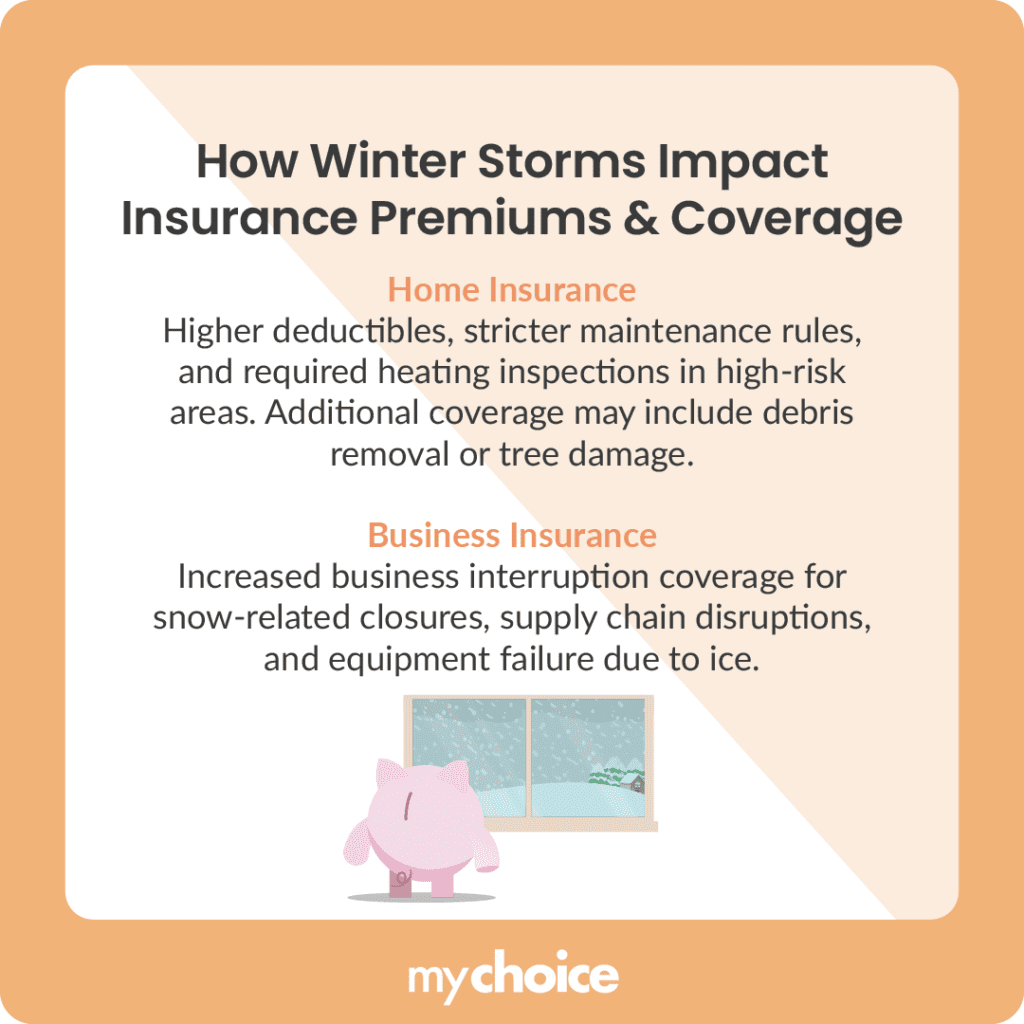
How Winter Storms Impact Insurance Premiums and Coverage
| Loss | Possible coverage starting point | Question to ask |
|---|---|---|
| Pipe freezes and bursts | Sudden indoor water damage may be covered, subject to heating, absence, vacancy and maintenance conditions. | Are there requirements for temperature settings, shutting off water, draining pipes or home visits when the property is unattended? |
| Ice dam sends water inside | Language about water damage, roof condition and gradual seepage may be considered independently. | Is sudden interior water damage covered, and which roof and maintenance costs are not covered? |
| Snow load damages or collapses a roof | The cause and existing condition of the structure may influence coverage. | What inspections or engineering evidence are required? What deductible and debris-removal limit apply? |
| Wind or a tree damages the building | Protection for damage from wind or falling objects may apply. | How are tree removal, cosmetic damage, matching and storm-created openings handled? |
| Power fails and food spoils | Food-spoilage coverage may be limited to a relatively low amount or require an endorsement. | What are the trigger, limit, deductible and photo requirements? |
| Snowmelt or sewer water enters | Overland water damage is typically separate from sewer-backup coverage. | Which sources of water are covered, and what limits, deductibles or exclusions apply? |
| A business closes | Commercial business-interruption coverage requires an insured trigger under its own wording. | Is property damage required? Is there a waiting period? Which income records are needed? |
Why Home Insurance Prices Have Increased
Between December 2019 and December 2025, Statistics Canada’s home and mortgage insurance price index for homeowners increased 45.0%, well above the 21.0% increase in the all-items Consumer Price Index over the same period.
Statistics Canada states that several factors have influenced Canada’s home insurance industry. While severe weather is one factor, higher home prices, construction costs, business costs and other insurance claims also play a role.
Renewal rates will vary by province, location, home characteristics, insurance company, past claims, coverage, deductible and replacement value.
What Homeowners and Businesses Can Do to Prepare
Fortify Your Property Against Water Infiltration
Even a sump pump with battery backup isn’t complete winter protection. The pump deals with water that makes its way into the area immediately surrounding it.
Before freezing weather, make sure roof leaks are repaired and drains, gutters and downspouts are clear. Direct melting snow away from the foundation.
Prevent Ice Dams From Forming on Roofs
Repair air leaks, inadequate insulation and poor ventilation to prevent uneven roof warming.
Hire a qualified service to remove snow or ice when the height, amount or slippery conditions pose a risk of falling or collapsing.
Read More: See Why a Necessary Roof Replacement Should Not Be Delayed
Keep Plumbing and Heating Systems Well-Maintained
Protect pipes and service the heating system.
Read More: Read the Furnace Repair and Maintenance Guide
Trim Trees and Secure Outdoor Items
Check your property for unsafe branches that may need attention before stormy weather. Stay away from downed trees and power lines. Secure loose objects before high winds, and avoid approaching unstable structures or live power lines.
Prepare for Power Outages
Follow all generator operating directions. Follow local directions to avoid carbon monoxide poisoning. Never use a source of heat that is not designed for indoor use. Prepare an emergency plan that includes heating and power for medications, pets, a place of refuge and an easily accessible emergency supply kit.
After a Winter-Storm Loss
- Keep people away from hazards such as structural damage, downed power or phone lines, flooding and carbon monoxide.
- When reasonable and safe, take steps to prevent additional damage. Contact your insurer or broker right away about temporary repairs and ask what actions are authorized.
- When safe, take pictures of the cause of the damage, damaged items and other pertinent information before cleaning up. Keep damaged items and receipts until your insurer or broker advises you how to handle them.
- Ask about exclusions, conditions, limitations, deductibles and other provisions in your insurance agreement that affect each coverage decision.
Read More: See How Home Insurance Treats Water Leaks