









It’s important to know what’s included and what’s not when it comes to theft in Canada. If you’re wondering how theft/break-in coverage works under home and tenant insurance, read on.
Using Statistics Canada’s 2024 police-reported crime statistics, the Financial Consumer Agency of Canada’s home-insurance guide, the Insurance Bureau of Canada’s home-coverage guide and IBC’s home-claim checklist, this guide explains coverage, valuation, limits, exclusions, steps after a break-in and evidence to keep.
Does Home Insurance Cover Theft And Break-Ins?
Theft coverage is part of many tenant, condo, and homeowner insurance policies. If a break-in happens, whether you’re covered depends on the circumstances of the theft and the type of home insurance you have.
Named-perils policies only cover losses from causes specifically named in your policy. Comprehensive policies generally cover direct physical loss or damage unless the item or cause of loss is specifically excluded in the policy.
In 2024, police services in Canada reported 121,033 breaking-and-entering incidents to Statistics Canada. This number includes break-ins not related to residential dwellings, so it’s not possible to convert it into the number of times someone’s home is broken into within a set amount of time.
| Loss after a break-in | Where coverage may sit | What can change the result |
|---|---|---|
| Broken door, lock or window | Dwelling, unit improvements or building coverage | The policy form, cause of damage, applicable deductible and ownership of the damaged property can change the result. |
| Stolen household belongings | Personal-property or contents coverage | Policy or coverage limits, proof of ownership, valuation method and applicable exclusions can change the result. |
| Jewellery, cash, art or collections | Contents coverage, often with a special limit | Theft sublimits, appraisals, schedules or endorsements can change the result. |
| Belongings stolen away from home | Off-premises contents coverage may apply | Factors that can change the result include location, storage duration, vehicle wording and category limits. |
| A stolen vehicle | Auto insurance, if the required physical-damage coverage applies | Home insurance may separately address belongings taken from it. |
| Home unsafe or temporarily unliveable | Additional living expenses may apply after an insured loss | The result can depend on eligibility, time and dollar limits, and costs above normal living expenses. |
What Theft Coverage Limits And Exclusions Should You Check?
When a theft occurs, people often assume stolen items will be covered up to the personal property limit listed in the policy. But not necessarily. Here are some of the things you should check on theft coverage in your home policy:
Read More: Compare Actual Cash Value and Replacement Cost for Stolen Property
Filing A Claim After A Break-In
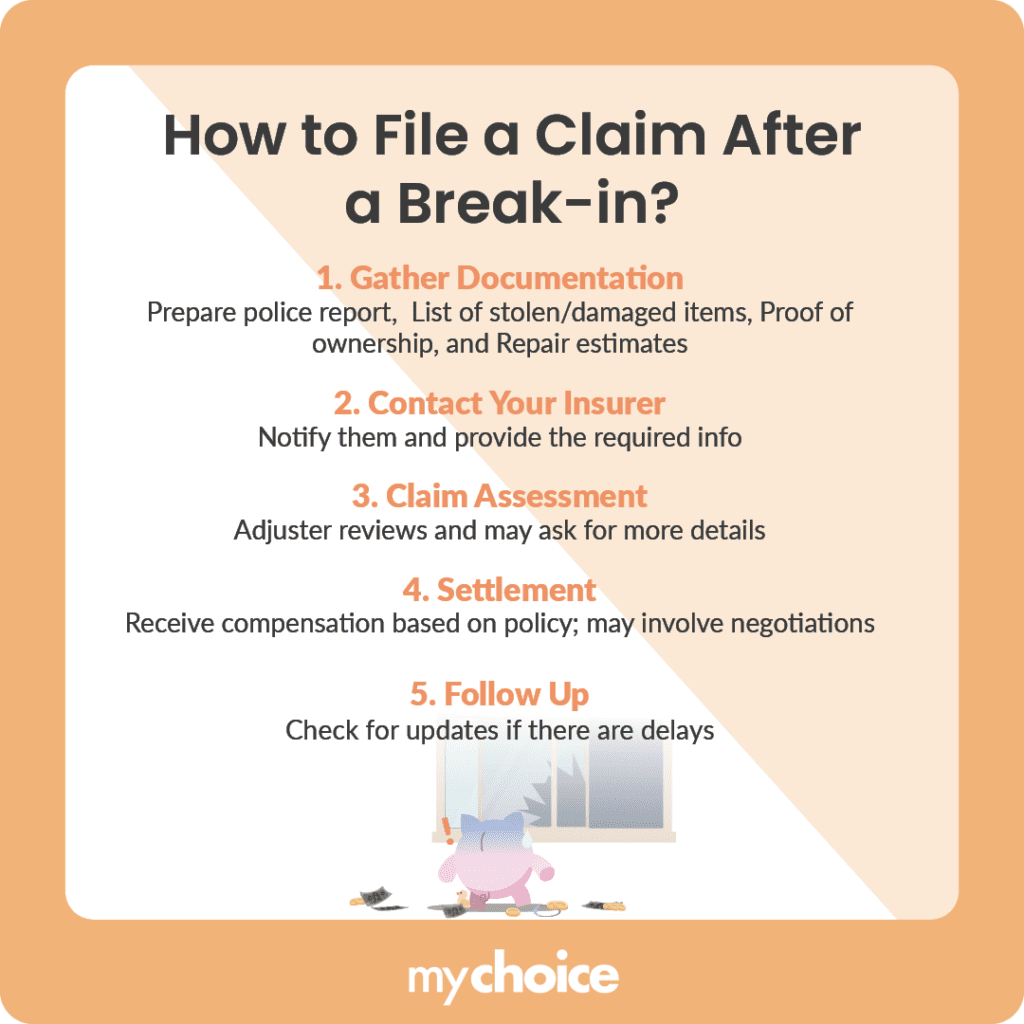
Notify the police as soon as possible after a break-in, and document the scene as it appears after the event.
Note all affected items and keep all receipts for purchases and any repair work.
Make emergency repairs only to secure the premises, but postpone permanent repairs until you have spoken to your insurer, as evidence may be lost.
1. Call The Police
Call the Police from a safe location if you think anyone is in danger or there may still be an intruder in the building. Ask for an occurrence/report number. Do not enter the location until the police say it’s OK. Don’t touch anything until the Police tell you to.
2. Document The Scene
Once the police allow you to re-enter, photograph or videotape every room in the property, any possible points of entry, and any damage.
Save any relevant messages, doorbell camera recordings, or alarm logs.
Do not clean up before documenting unless necessary for immediate safety reasons.
Get names and account information for any witnesses.
3. Create An Inventory
Make a detailed inventory of items that have been stolen or damaged as you go through the property, room by room. Include the following details about each item:
- Brand, model, and serial number (when applicable)
- Approximate date of purchase
- Purchase price
- Current replacement value
Support your inventory with receipts, photos, owner’s manuals, credit card statements, and cloud storage, as needed. If you’re not sure of specific information, indicate that it’s an estimate rather than a guess.
4. Secure Your Home
Take all reasonable steps to protect your home against additional losses. For example, you might need to board broken windows or install new locks. Consult with your insurer before making permanent repairs where possible. Keep receipts for all repairs and clean-up.
Damaged items, such as doors, windows, and locks, may be needed to support your claim. Unless there is an immediate hazard, leave damaged items in place until you have permission to dispose of them.
Contact The Insurer And Control The File
Report the loss as soon as possible.
Find out from the insurer what sections of the policy apply to the loss, what limits apply to these sections of coverage and the amount of any applicable deductibles. Ask the insurer to confirm receipt of the inventory, police information, and repair estimates. Ask what information or documents are required and where to send them, whether the insurer must examine damaged property before it is repaired and whether a formal proof-of-loss must be completed.
Deadlines for submitting a proof-of-loss are important. According to the IBC, proof-of-loss is usually completed within 30 days, but this depends on the policy terms and provincial rules.
Carefully review the amount assigned by the adjuster to the value of each item. The insurance policy terms will govern the claim outcome, whether items are repaired or replaced, or whether a settlement is offered for the overall value of the loss.
Read More: See How to Work With a Home Insurance Claim Adjuster
Does Tenant Insurance Cover Theft?
If a thief breaks in and causes damage to the rental, contact the landlord as soon as possible. Take photos or make notes about any damage. If there’s a damaged door, for instance, or a broken window, the landlord is responsible for ensuring the building is properly maintained. Don’t agree to pay for anything or admit fault before you’ve reviewed your lease and learned more facts.
Your own tenant’s insurance may cover your belongings, additional living expenses and personal liability. Keep in mind, though, that the landlord’s insurance generally won’t cover your belongings. You must report stolen or damaged items to your insurer.
Before A Loss: Make A Theft Claim Easier
Create an inventory of your belongings by room. Take photos of items and write down serial numbers. Keep a copy somewhere other than your house, in case you need it and can’t access your home. Ask your agent if replacement value coverage requires receipts.
Find out what sublimits your policy has for certain types of items, including cash, jewelry, collectibles, bicycles, business property, and property in storage. Some policies also limit coverage for property stolen from other locations.
Tell your insurer if your home will be vacant or rented, used for business purposes or undergo major renovations.
Read More: See How Home Security Systems Can Lower Break-In Risk