









The wildfire that devastated Jasper National Park in July 2024 significantly affected the local community and insurance industry. As of early 2025, insured losses were estimated at $1.23 billion, making it the second-costliest fire in Canadian history.
Read More: Canadian Cities Facing the Highest Wildfire Risk in 2026
The Impact of the Jasper Wildfire on Canadian Insurers at a Glance
The Jasper wildfire produced substantial home, business and vehicle insurance claims. However, its effect on insurance rates cannot be separated from other factors affecting premiums, including rebuilding costs, regional wildfire exposure, claims history and reinsurance costs.
Standard homeowner and tenant insurance policies generally cover damage caused by fire. They may also cover temporary accommodations and additional living expenses when a mandatory evacuation order prevents residents from returning home. Coverage remains subject to the policy’s limits and conditions.
Affected residents should contact their insurer to confirm what expenses are covered, how long evacuation coverage applies and what receipts or other documents are required.
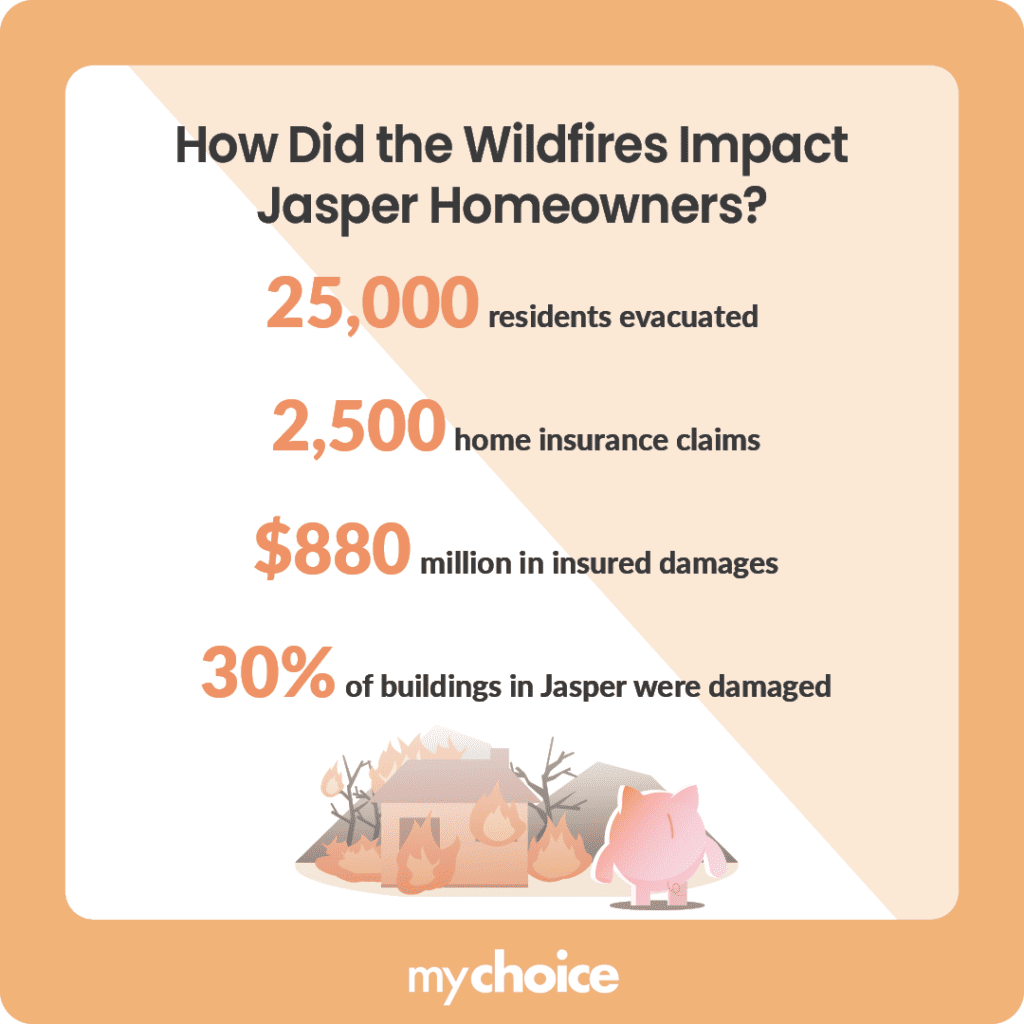
How Did the Wildfire Affect Jasper Homeowners?
In July 2024, the Jasper wildfire caused highway closures, property destruction and the evacuation of residents and visitors. Essential infrastructure, including the hospital, schools, water-treatment plant and emergency-services building, survived the fire.
More than 20,000 residents and visitors evacuated to neighbouring communities. Residents began returning to Jasper on August 16, 2024, once immediate hazards had been addressed and basic services were available.
Of the 1,113 structures in the Jasper townsite, 358 were destroyed. These included homes, apartment buildings, a seniors’ residence, businesses, hotels and churches. Parks Canada estimates that 806 residential units were lost.
Insured losses were initially estimated at more than $880 million. As of early 2025, that estimate had risen to $1.23 billion.
The Alberta government also provided emergency evacuation payments of $1,250 for each eligible adult and $500 for each eligible dependant under 18. These payments applied to residents affected by a mandatory evacuation order lasting at least seven days.
What Did the Jasper Wildfire Mean for the Insurance Industry?
Increased Claims
The destruction of homes, businesses and vehicles resulted in a large number of claims. The final insured-loss estimate made the Jasper wildfire the second-costliest fire in Canadian history.
A major event can affect an insurer’s claims costs, but it does not determine premiums by itself. Rates are based on several factors, including location, rebuilding costs, property features, previous claims and the insurer’s assessment of future risk.
Reassessment of Wildfire Risk
Insurers may reassess properties in areas with significant wildfire exposure. This can include reviewing local fire protection, access routes, surrounding vegetation, construction materials and measures taken to reduce wildfire risk.
The effect on an individual homeowner depends on the property, location, insurer and available coverage. Homeowners should not assume that the Jasper wildfire alone will cause a particular change to their premium.
Rebuilding and Claims
Rebuilding after a wildfire can take years. Claim timelines may depend on site access, debris removal, environmental testing, contractor availability, permits and the extent of the damage.
Homeowners should keep copies of their policy, claim correspondence, photographs, inventories, estimates and receipts. They should also ask their adjuster which expenses are covered and whether approval is needed before repairs begin.