









Rising climate risk also means your home is more likely to suffer climate-related damage. If your house is at higher risk of climate-related damage, your home insurance rates will likely increase. But will home insurance become a luxury product if this keeps happening?
Keep reading to learn how quickly insurance prices have increased, where coverage availability matters and how to reduce costs without creating a dangerous gap.
Will Home Insurance Become a Luxury Product in Canada?
As climate change leads to more natural disasters, the increased occurrence of disasters also impacts your finances.
Unfortunately, with the increasing likelihood of your home becoming damaged by climate factors, you’re more likely to pay more for your home insurance. Let’s take a look at the increase in home insurance premiums in the past decade compared to the increase in wages.
According to Statistics Canada, the cost of home and mortgage insurance for homeowners rose 45.0% between December 2019 and December 2025. That’s more than double the increase in the Consumer Price Index, which rose 21.0% over the same period. This shows how quickly insurance prices have increased, though it doesn’t specify who cannot afford coverage.
How Home Insurance Prices Have Changed
Statistics Canada’s homeowners’ home and mortgage insurance price index provides a consistent way to compare changes in insurance prices across provinces over five years. The increase was 55.8% in Alberta and 19.9% in Newfoundland and Labrador.
Statistics Canada reported that the national increase of 38.6% over the five years was not unusual compared with several earlier periods. Still, the reasons for increases have been changing, with extreme weather playing a larger role.
| Province | Price change, Dec. 2020 to Dec. 2025 |
|---|---|
| Canada | 38.6% |
| Newfoundland and Labrador | 19.9% |
| Prince Edward Island | 26.7% |
| Nova Scotia | 43.1% |
| New Brunswick | 28.9% |
| Quebec | 30.8% |
| Ontario | 36.5% |
| Manitoba | 46.7% |
| Saskatchewan | 40.9% |
| Alberta | 55.8% |
| British Columbia | 37.4% |
Source: Statistics Canada, Extreme weather impacts on consumers and insurers in Canada, December 2019 to December 2025: an updated analysis.
This is a price index, not an average premium paid. Statistics Canada notes that its quote data reflects representative profiles and does not contain transaction prices for existing active contracts.
Current MyChoice Home Rates by Province
This analysis is based on thousands of home insurance quotes collected through MyChoice since the beginning of 2026 and reflects annualized, pre-tax rates normalized to a single home and coverage.
| Province | Annual premium |
|---|---|
| Alberta | $2,521 |
| British Columbia | $2,334 |
| Ontario | $2,250 |
| Saskatchewan | $1,447 |
| Manitoba | $1,329 |
| Nova Scotia | $1,311 |
| New Brunswick | $1,264 |
| Newfoundland and Labrador | $1,223 |
Who Faces the Greatest Affordability Pressure?
| Household or property | Why pressure can be greater | Action before renewal or purchase |
|---|---|---|
| Mortgaged homeowner | Property insurance must be in place for closing, and the lender may set requirements | Ask the lender what evidence, perils and limits are required |
| High flood, wildfire, hail or coastal risk | Quotes, deductibles, sublimits or optional coverage may differ by location | Check address-specific availability before committing to the property |
| Older or difficult-to-rebuild home | Roof, wiring, plumbing, materials and replacement complexity affect underwriting | Get inspections, repair records and an accurate rebuild estimate |
| Condo-unit owner | The unit policy and corporation policy can leave assessment, deductible and improvement gaps | Compare both policies and the corporation’s deductible |
| Fixed- or low-income household | The same dollar increase consumes more available income | Test deductible and payment options without reducing essential coverage |
What Is Driving Premium Pressure?
Overall rate increases are driven by claims from severe weather, higher material and replacement costs, labour availability and increased repair costs.
Statistics Canada keeps property and policy features constant to capture overall changes in insurance prices. Your rate could rise or fall with changes in rebuilding costs, deductibles, claims history, coverage, location or the age and condition of your home, including its roof, electrical system and plumbing.
Read More: Read About Canada’s Reinsurance Market and Climate Risk
How Reinsurance Can Affect Insurer Costs
Global trends in reinsurance do not necessarily affect renewal rates in your household. Ask what has changed in your quote.
Reinsurance is coverage insurers purchase to help spread the cost of large losses. Changes in reinsurance costs, availability and contract terms can affect insurers’ costs.
Read More: Read About Public Backstops for Catastrophe Risk
What’s Being Done in Response to Climate Risk?
Earthquake, overland-flood and sewer-backup coverage may not be included in a standard home insurance policy.
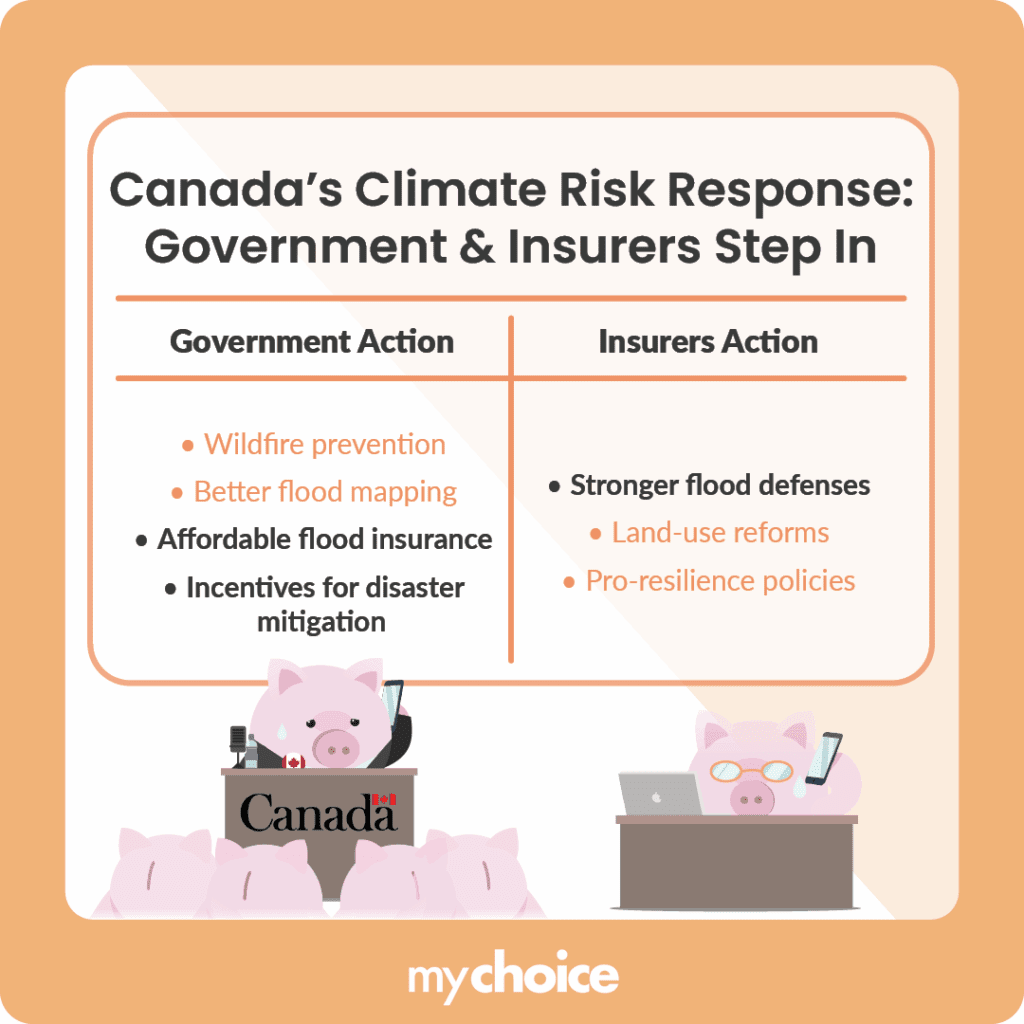
While Canada has revamped its disaster-assistance system and is developing a national flood-insurance plan for high-risk properties, homeowners could be left without protection if they count on a future insurance product or assistance program to cover current risks. Coverage will depend on how the programs are set up and provincial participation.
How You Can Save Money on Home Insurance
Figure out how much coverage you need before comparing prices. Once you’ve done that, compare similar levels of coverage.
Removing coverage for a peril you know you need isn’t really a saving. Dropping the limit to less than full replacement is not really a saving. Raising the deductible to an amount you can’t afford isn’t an equivalent comparison.
Read More: Read the Guide to Choosing a Home Insurance Deductible
Shop Around
If you are getting fewer quotes than you’d like, ask your broker what aspect of the property or type of peril may be limiting quotes. Send the same property information, including the address, construction, limits, deductibles, claims and endorsements, to all insurers.
Bundle Policies
Get quotes for each policy individually with identical coverage, then compare them with the combined price.
Increase Your Deductible
Higher deductibles may be acceptable if you can cover the increase. Ask for quotes using several deductibles and note the premium savings for each. Divide the increase in the deductible by the annual savings to find how many claim-free years it takes for the increase to pay off.
Some perils, such as water, earthquake or wind, may be excluded or have a different deductible.
Install Protection Measures
Check with insurers about possible policy credits or discounts for damage-mitigation improvements, including backwater valves, backup power for sump pumps, fire-resistant improvements and maintenance of roofs and drainage.
Even if you don’t receive a discount, improvements may still be worthwhile if they help prevent major damage. Save receipts, photos, building permits and other documentation.
Read More: See How Home Security Systems May Affect Insurance
Pay Premiums Annually
Ask for both the full annual cost and the cost of making payments in writing.
Paying annually may save financing or service charges. Not all insurance companies offer discounts for paying in full.