









How Long Can a Tenant Have a Guest in Ontario?
In most Ontario tenancies, there is no legal time limit on how long a guest can stay, provided the tenant still occupies the unit, and the guest does not cause problems such as damage, illegal activity, or disturbances.
Below are some guidelines to keep in mind about having guests over:
- You can have guests over as long as you like and as often as you want.
- In most cases, landlords cannot restrict a tenant’s ability to have guests, and attempts to impose such restrictions may violate a tenant’s right to reasonable enjoyment of the rental unit. Landlords can’t charge extra fees or threaten to raise your rent if you have guests over.
- Note that subsidized or rent-geared-to-income (RGI) community housing may have guest-stay limits set by the housing provider, which tenants must follow.
- If you’re staying in a community housing unit, double-check the restrictions to avoid getting in trouble with your Ontario landlord.
- If you need to have guests over for a longer period of time, but you live in community housing, you may be able to apply for an extension.
Do I Have to Tell My Landlord if I Have a Guest Over?
No, you’re not legally required to tell your landlord if you have guests staying over at your Ontario home. Tenants have a right to privacy, so you don’t have to tell them every time you invite someone to your home. This general rule holds true even if your guest temporarily moves in.
However, it’s still a good practice to do so out of common courtesy. Note that if you have a guest stay temporarily or move into your Ontario home, you are liable for any damage that they cause because you’re the primary tenant who signed the lease.
Subletting Without Landlord Permission in Ontario
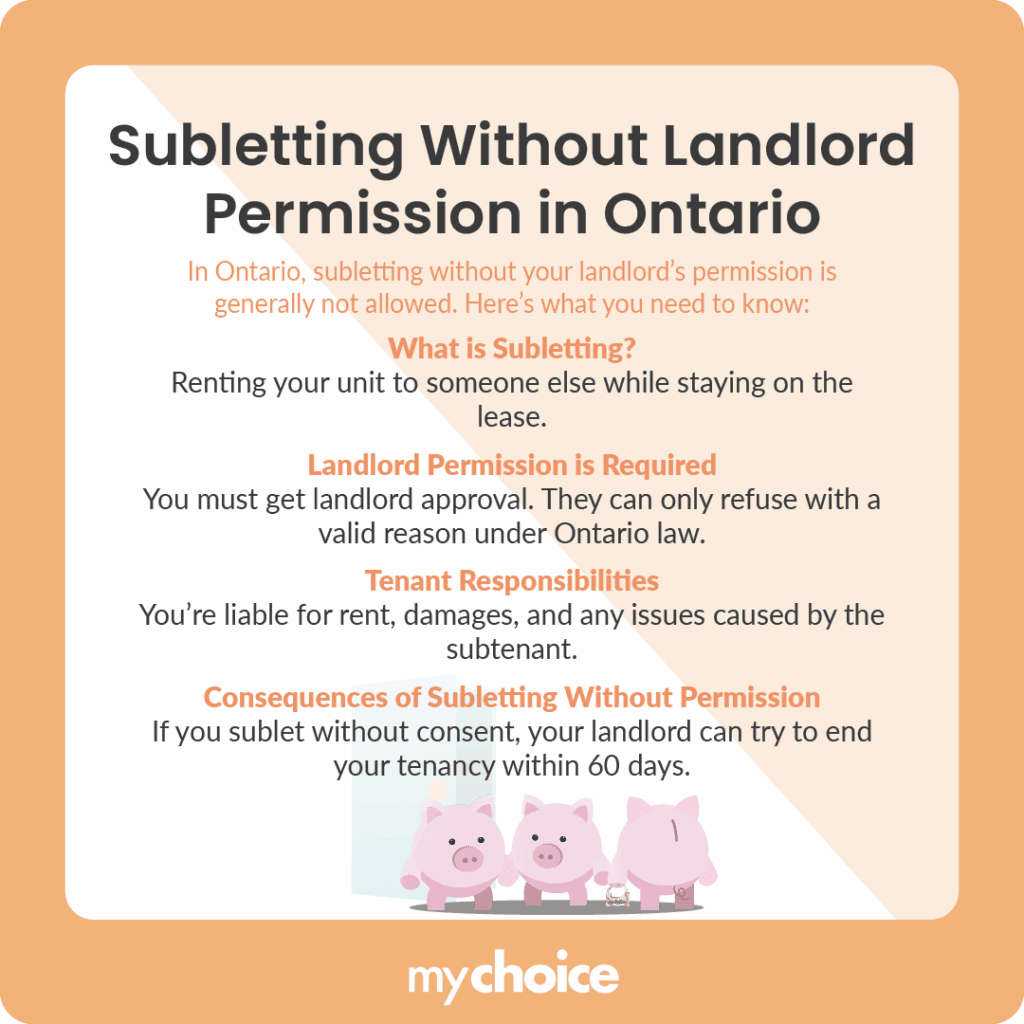
Generally, subletting without your landlord’s permission is not allowed. Here’s how subletting works, and what happens when you do so without your landlord’s permission:
- Subletting is when the original tenant rents out the property to someone else. Tenants may do this to cover the increasing cost of rent or to avoid the consequences of breaking a lease if they suddenly need to move.
- While the original tenant’s name will still be on the lease with the landlord, the original tenant and the person they’re subletting to will have a completely separate agreement.
- You should apply for subletting with your landlord, as your request can’t be denied without a valid reason under the Ontario Residential Tenancies Act. Note that you’ll be liable for any property damage or other issues that a sublessee will cause.
- If you sublet without an agreement from your landlord, they have 60 days to file for termination of your tenancy under the Ontario Residential Tenancies Act.
Why Is Subletting Strictly Regulated?
Wondering why you need your landlord’s permission for subletting? Subletting is strictly regulated for these reasons:
- Landlords tend to have their own home insurance policies. These policies cover situations like storms, theft, and other unexpected damage. Subletting without your landlord’s permission exposes them to serious liabilities, which can cause their premiums to go up.
- Because of the additional risk brought by sublessees to a property, having one without your landlord’s knowledge can cause problems if they need to file a home insurance policy claim. In some cases, this can cause a claim to be denied.
- Subletting affects the property’s occupancy limits. Both tenants and landlords need to be aware that, depending on factors like the dwelling’s size, fire exits, and security, having guests over indefinitely or subletting can cause the property to exceed those limits.
Legal Consequences of Keeping Guests Indefinitely
While there’s no law that expressly prevents you from having your guests over indefinitely, there can still be serious legal consequences if you do so. Here’s a breakdown of some of the legal issues you may face:
- You will be liable for any property damage or disturbances to other tenants that your guests cause during their stay.
- If a guest causes damage, the tenant may be responsible for paying for repairs or damages, since Ontario does not allow general security deposits beyond last month’s rent.
- In some cases, a landlord may seek eviction if a guest causes damage, illegal activity, overcrowding, or substantially interferes with other tenants’ enjoyment of the property.
- Any legal action taken, including eviction, will go on your record, while the guest has no legal liability. This can seriously affect your future rentals, as well as your tenant insurance premiums and coverage.
Having Guests Indefinitely Affects Your Insurance
Having an undisclosed long-term guest can increase your tenant insurance premiums, or even keep you from being covered at all. Here’s why companies may choose to increase your insurance rates if you have guests over indefinitely:
Insurance companies spend time assessing the risk of covering a tenant, which extends to checking for criminal records and rental history. This gives them a picture of the likelihood of having to pay out a claim, as well as how much this may be.
Key Advice from MyChoice
- Make sure you understand the difference between a guest and a subtenant. If someone is effectively living in the unit in place of you, it may be considered subletting and require landlord approval.
- Consider sharing your tenant’s insurance with your roommate if they live with you for an extended period.
- Review your tenant insurance policy if a guest stays for an extended period. Some insurers may require you to disclose additional occupants to ensure your coverage remains valid.
- Avoid overcrowding your rental unit. Exceeding occupancy limits can lead to disputes with your landlord and potential safety concerns.