









Mass timber is a category of engineered wood products created by bonding solid wood layers together to form large structural components like columns, panels, and beams for construction.
This material has become popular because it’s renewable and stores carbon, helping offset emissions from other materials in a building, such as steel and concrete. Prefabricated mass timber components also allow faster, quieter onsite construction, and their relatively high strength compared to weight allows them to be used even for high-rise buildings.
We reviewed the National Research Council’s National Building Code of Canada 2020 page, Ontario’s 2024 Building Code decision notice, the Canadian Wood Council’s mass-timber insurance questionnaire, and the Insurance Bureau of Canada’s home and condo coverage guide.
Keep in mind that mass-timber insurance during construction differs from that of a building that has been built and is being lived in.
How Does Condo Insurance Work in a Mass Timber Building?
Factors affecting premiums, deductibles, and coverage can include adherence to building codes, building height, fire suppression systems, moisture control strategies, regional emergency response, restoration strategies, replacement values, and the building’s claims history.
The condo corporation typically insures the building structure and common elements. Unit owners insure their contents, loss of use, liability, improvements to their units and assessments levied specifically against the owner’s unit.
Always check condo corporation declarations and insurance policies for exact coverage.
What Is a Mass Timber Condo?
Mass timber uses large engineered wood products instead of conventional wood products.
Encapsulated mass-timber construction is a building method where other building materials protect structural mass timber to achieve required fire resistance.
| Code reference | What it says | Buyer or insurance implication |
|---|---|---|
| National Building Code of Canada 2020 | Encapsulated mass-timber construction up to 12 storeys introduced into the model code. | If the province or territory has adopted the model provision, how? |
| Ontario Building Code changes effective January 1, 2025 | 18-storey encapsulated mass-timber construction shall be allowed when the required fire and structural requirements are met. | Use the permit date, approved plans and occupancy document(s) for the actual building. |
| Local approval and building records | The project may include alternative solutions, project-specific inspections and project-specific conditions. | Request documentation that shows how the structure complied with the building code in effect at the time. |
How This Affects Your Premiums and Deductibles
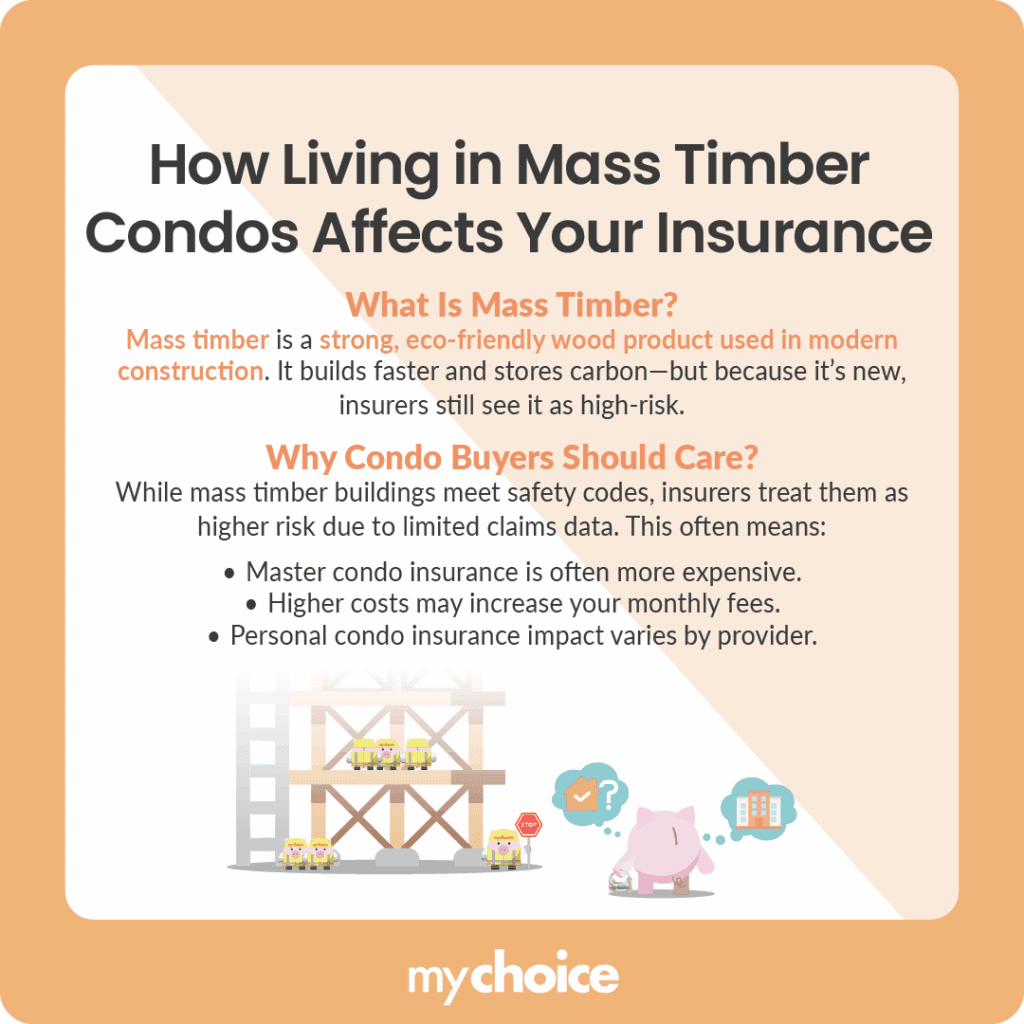
When it comes to the master policy, your condominium corporation’s insurance costs are likely to be higher for a mass timber building because of hesitation from insurers to cover this riskier construction type. These increased costs get passed down to unit owners through higher monthly maintenance fees.
While some insurers may charge higher premiums on your personal condo insurance if they find out your unit is in a mass timber building, others might not. This is largely because personal condo insurance primarily covers interior improvements and your belongings instead of the building’s structure itself.
What to Ask Before Buying a Mass Timber Condo
Thinking of getting a condo in a mass timber building? Before you make this crucial decision, ask your insurer and condo corporation these questions:
About the Building’s Master Insurance:
- What is the annual cost of the master insurance policy, and how does it compare to similar concrete buildings?
- How much of the master policy cost is built into monthly maintenance fees?
- Has the condo corporation experienced any insurance-related challenges or claim denials?
About Your Personal Coverage:
- Will my personal condo insurance be affected by the building’s construction type?
- Are there any specific coverage limitations or exclusions related to mass timber construction?
- How would a major building incident (like water damage from fire suppression) affect my personal coverage?
About Future Costs:
- How might insurance costs change as the building ages and more claims data becomes available?
- What happens if the building can’t renew its master policy with current insurers?
- Are there any special assessments planned or anticipated for insurance-related costs?
About Building Specifications:
- What fire suppression and detection systems are in place beyond code requirements?
- How is the building designed to manage water damage risks?
- What warranties or guarantees does the developer provide regarding insurance costs?