









Considering cashing out your permanent life insurance policy? Learn what happens when you do, including when it makes sense, how to estimate what you’d receive, alternative options that may let you keep some of your life insurance, and what to check before signing your insurer’s policy-surrender documents. Our team reviewed the federal life-insurance guide, section 148 of the Income Tax Act, Ontario’s Insurance Act and the Canadian Life and Health Insurance Association’s life-insurance guide.
Cashing out your permanent life insurance can get you some much-needed money. However, when you surrender your entire policy, you give up your life insurance coverage. In addition, cashing out could result in taxable income.
Should You Cash Out Your Life Insurance Policy?
Term insurance generally does not have a cash surrender value. Permanent insurance may have a cash value; however, it does not equal the amount you’ve paid into the policy. Cash values are often quite small during the first few years.
Do not surrender your insurance unless you no longer need the death benefit or have replacement coverage in force.
Get written confirmation of guaranteed and non-guaranteed values, taxable policy gain, outstanding policy debt and every available non-forfeiture option.
Reasons To Cash Out Your Life Insurance Policy
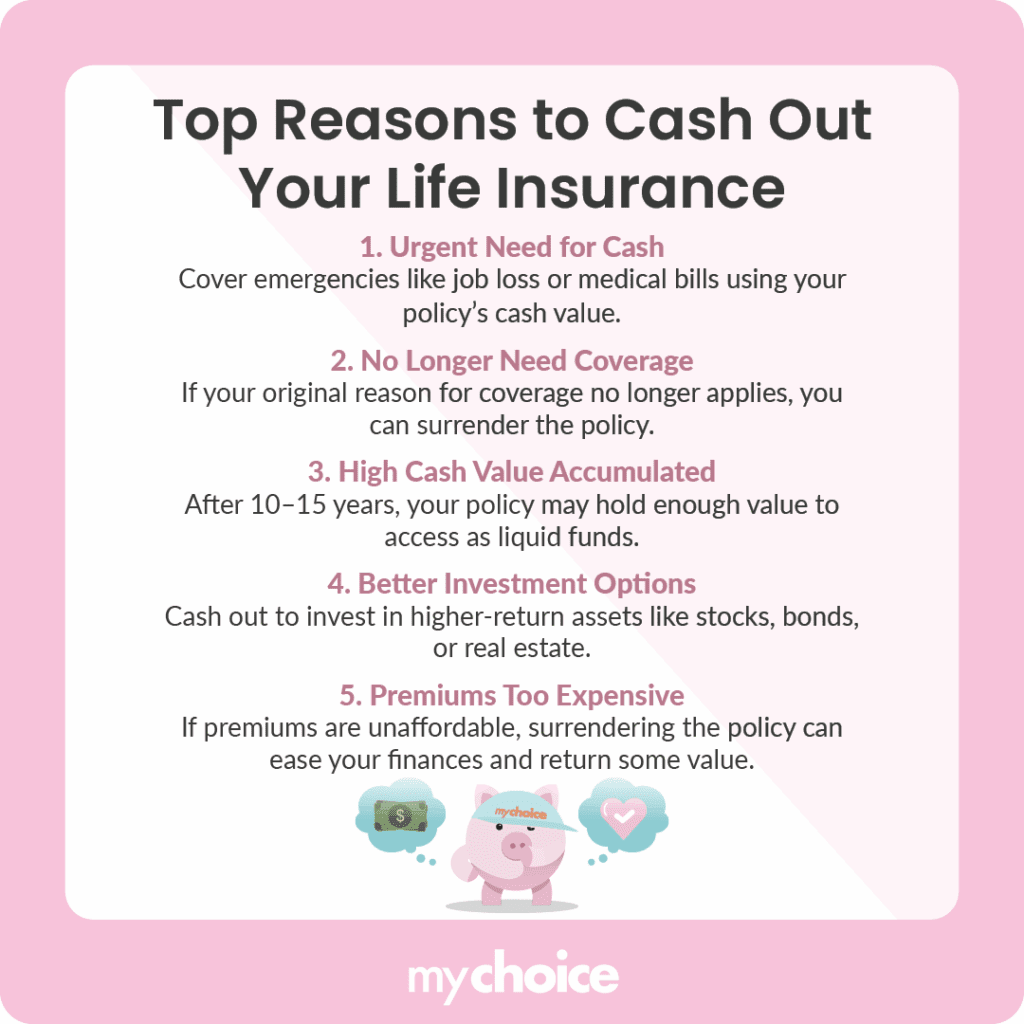
You Need Cash Urgently
Surrendering a life insurance policy turns illiquid policy value into liquid money. However, surrendering a policy means giving up coverage permanently, so consider less damaging alternatives, such as a smaller withdrawal or a policy loan (if your policy allows it), especially if you only need money temporarily. Also, compare how long it will take to receive the money, the amount you’ll receive and the tax implications of surrendering the policy.
You No Longer Need Coverage
Your original reasons for obtaining coverage may no longer apply. Perhaps your debts are now paid off, your dependants can support themselves, or you’ve changed your estate plan.
Before concluding that your death benefit serves no further purpose, make sure you’ve considered support obligations, final expenses, or business agreements that would justify keeping your policy.
Your Policy Has Built Significant Cash Value
Use in-force values, NOT rules of thumb. Don’t assume policies build cash in a certain number of years. The ending cash value will vary according to the terms of the policy, premium payments made, guarantees, dividends, charges, withdrawals, and loans.
Read More: See How Life Insurance Cash Value Is Calculated
You Can’t Afford The Premium Costs
Ask your insurer what the least expensive ways are to maintain the amount of insurance that you need. Options may include reducing the amount of insurance, using cash values under an automatic premium-loan provision, or exercising a non-forfeiture option. Whichever option you choose, the policy’s future values and benefits will differ.
When You Shouldn’t Cash Out Your Life Insurance Policy
| Reason to pause | Why it matters | Evidence to get |
|---|---|---|
| Your family or estate still needs the benefit | Surrender permanently ends that contract’s death benefit | Updated needs calculation and beneficiary review |
| Your health has changed | Your new insurance may be denied, cost more money or come with different policy terms. | Approved replacement policy before any cancellation |
| The policy has favourable guarantees | Getting a new insurance policy may have implications, such as restarting your policy’s costs, the contestability period and early policy values. | Side-by-side guaranteed illustrations |
| The surrender mainly funds a speculative opportunity | Investment risk and potential tax liability. Together, the investment risk and tax could be higher than the amount of value you release from your policy. | Written after-tax comparison, fees and downside scenario |
Alternatives To Cashing Out Your Life Insurance Policy
| Option | What it may accomplish | Trade-off to confirm |
|---|---|---|
| Partial withdrawal | Access part of its cash value and maintain some level of coverage. | Taxable gain and lower cash value or death benefit |
| Policy loan | Borrows under the contract without full surrender | Interest, possible taxable gain, lapse risk and reduced proceeds |
| Collateral loan | Uses the policy to support separate credit | Credit approval, variable rate, payments and lender rights |
| Reduced paid-up insurance | Use value to keep in force a smaller permanent death benefit that doesn’t require scheduled premiums. | Lower benefit and product-specific availability |
| Extended term insurance | Value can be used to retain the original benefit for a limited amount of time. | Coverage ends after the stated period |
| Reduce coverage or change dividend option | May lower the amount you must pay | Effect on guarantees, values and long-term benefit |
Don’t assume you can transfer your life insurance policy to an unrelated buyer. Some jurisdictions, including Ontario, prohibit trafficking in life insurance policies. If you’re interested in a life-settlement transaction, get advice about your province’s laws before proceeding.
Read More: Compare Cashing Out With Borrowing Against Life Insurance
Before You Sign A Surrender Form
- Ask your insurer for an in-force illustration, which will show the policy’s guaranteed and current values, any outstanding loans and dividends. Ask for the current surrender value and any estimated taxable gain.
- Ask about all of your non-forfeiture, withdrawal, loan and benefit-reduction options.
- If you think you’ll need replacement coverage, get it approved before you give up your current policy.
- Compare policies on policy guarantees, exclusions and contestability provisions.
- Consult with your tax professional regarding the tax consequences of the insurer’s adjusted cost basis and estimated policy gain, which the insurer should be able to report for you.
- Before changing coverage, check for any effect on beneficiary designation, policy loans or other assignments as collateral, divorce decrees for child or spousal support, and corporate ownership.
Read More: Review Policy-Cancellation Consequences Before Surrendering Coverage