









Life insurance is generally more affordable when purchased at a younger age. Once a child reaches the age of majority, parents may be able to help them secure coverage while they are young and healthy, potentially locking in lower premiums, protecting against co-signed debts, and preserving access to coverage if their health changes later.
Read on to learn when parents can buy life insurance for an adult child, whether consent is required, who should own the policy, and the advantages and drawbacks of purchasing coverage early.
To complete this article, our team reviewed common ownership rules, underwriting practices, and policy structures used by Canadian life insurers for adult applicants. We also drew on our experience helping Canadians compare life insurance policies to explain how ownership, beneficiary designations, underwriting requirements, and policy transfers typically work when parents purchase life insurance for an adult child. Premium examples are based on MyChoice internal quote data.
Can you Buy Life Insurance for Your Adult Child in Canada?
Yes. Parents can buy life insurance for a child over 18—as long as the child consents, signs the insurance application and completes the medical underwriting of the policy.
Can I Buy Life Insurance for an Adult Child Without Them Knowing?
No. Once the child reaches the age of majority, they generally must consent to the coverage, participate in the application, and provide any health information required by the insurer.
How to Buy Life Insurance for an Adult Child
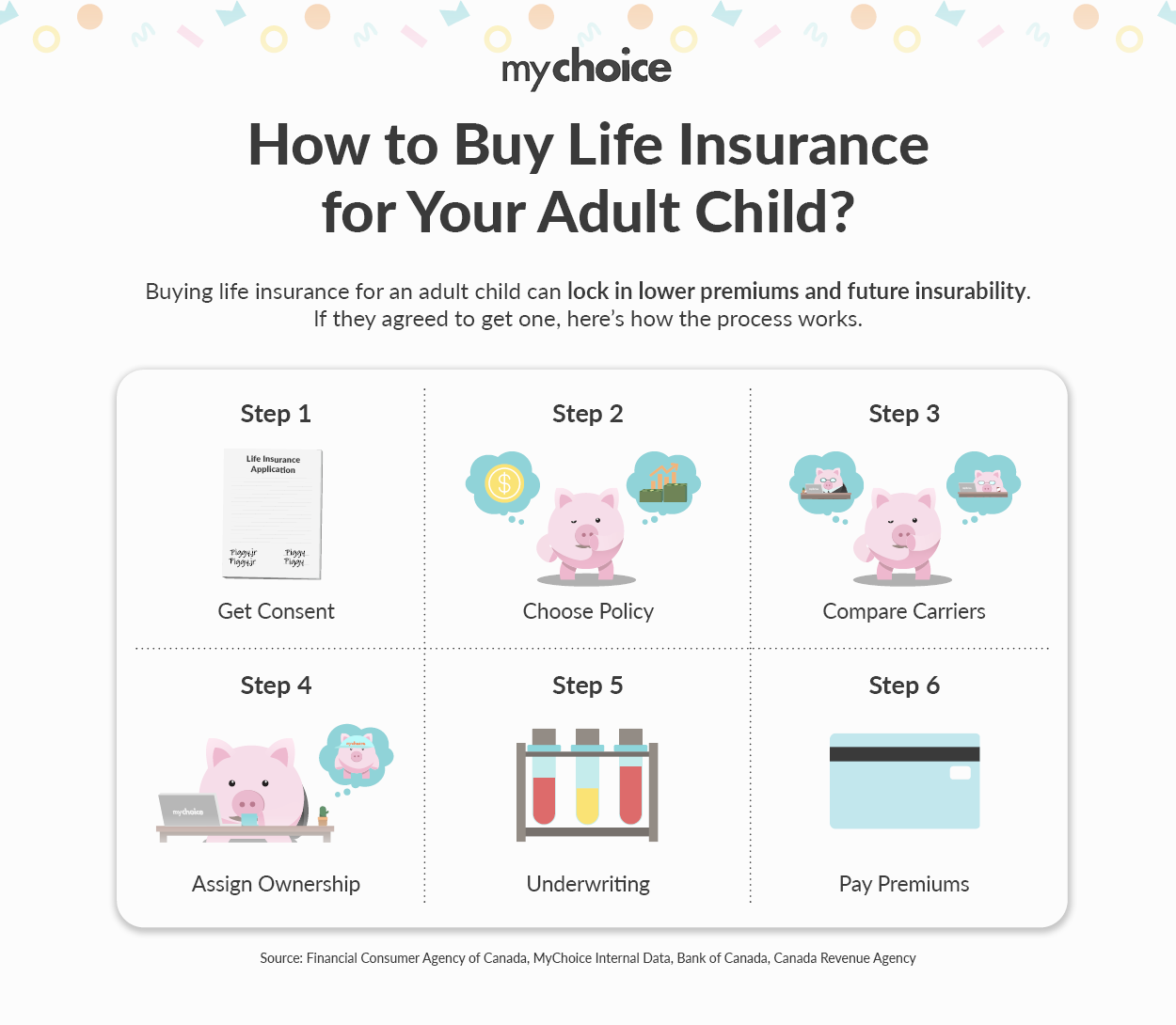
Once you decide to purchase life insurance for your adult child, you must:
- Get consent.
- Choose a policy, whether that’s term, whole or universal life insurance.
- Compare premiums from different providers using our life insurance quoter. You can always contact a broker or an insurance agent if you already have someone in mind.
- Select your best option.
- Determine who the owner and beneficiaries of the policy will be.
- Complete any required underwriting, which may include health questions, medical records, or an exam depending on the policy and coverage amount.
- Once approved, pay the premium.
Read More: How to Get Life Insurance After Being Denied Coverage
When Is It Not a Good Idea to Buy Life Insurance for an Adult Child?
Parents should think twice about purchasing life insurance if:
- The child does not consent to the policy. An adult child needs to sign the application and complete a medical questionnaire.
- There are other financial priorities. If finances are tight, it might be better for the family to allocate funds to a Registered Education Savings Plan (RESP) or a Tax-Free Savings Account (TFSA).
- Income protection isn’t needed. If no one relies on the adult child financially and there are no co-signed debts, parents might want to allocate their money elsewhere.
What are the Main Benefits of Buying Life Insurance for an Adult Child?
There are numerous benefits of buying life insurance for adult children over 18.
How is the Policy Structured?
Once the adult child has consented, the parent may apply to own the policy and pay the premiums, while the adult child remains the insured person and completes the required underwriting.
Next, the parent must choose the type of life insurance: term or whole or universal life.
Read More: Term vs Whole Life Insurance and Whole vs Universal Life Insurance
The policy owner can name the beneficiary, subject to the policy terms and whether the designation is revocable or irrevocable. A parent may initially be named to cover debts or other financial obligations, but the beneficiary can often be updated later as the adult child’s circumstances change.
Can my Adult Child Take Over the Life Insurance Policy?
Yes. The parent may be able to transfer ownership of the policy to the adult child, subject to the insurer’s forms, policy conditions, and potential tax consequences.
This involves filling out an absolute assignment or Transfer of Ownership form from your insurer, signatures from both parties, and an update on the new beneficiaries.
Sometimes, parents will ask the adult child to take over the life insurance policy for financial reasons. While this can be a financial hardship for an adult child with a low income, some permanent life insurance policies use dividends earned from their policies to pay premiums. This can lower or eliminate monthly payments.
Read More: Taking Over Life Insurance Bought By Your Parents