









When you buy life insurance, it’s intended to protect your loved ones should you pass away. And for most people, that’s in the distant future.
But if the insured person passes away in the first two years after buying a life insurance policy, the insurance company may investigate to rule out material errors, omissions or misrepresentation. It wants to know if material information was misrepresented or withheld during the application. And if that’s the case, it may deny the death benefit.
It’s why it’s important to be as truthful and accurate as possible when disclosing your health status, hobbies and lifestyle during the life insurance application process.
Here’s what you need to know about the first two years after you purchase a policy.
Life Insurance Contestability Period Explained
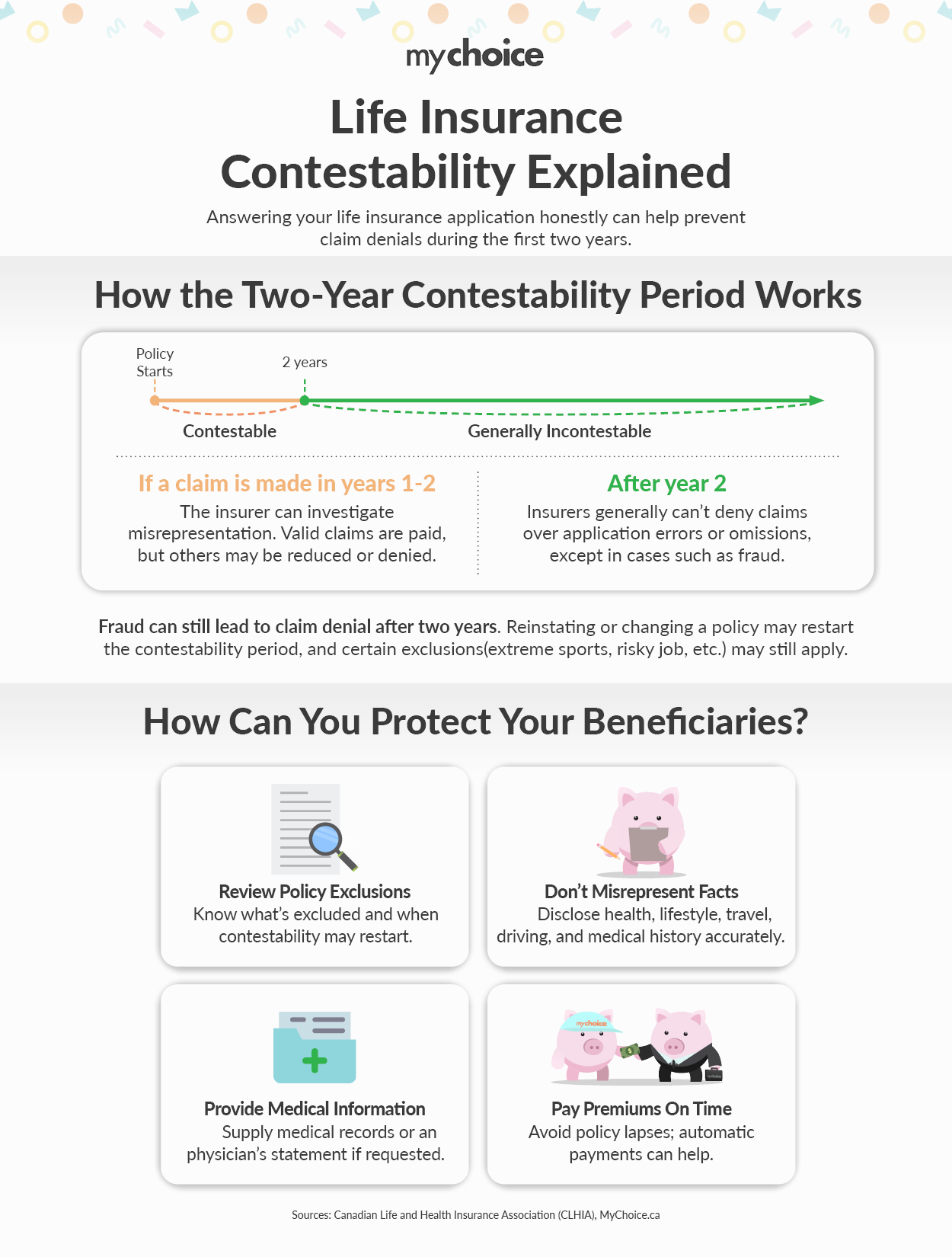
A life insurance contestability period is generally two years from the date the policy becomes valid or is reinstated. A contestability period is not a waiting period, as coverage is in effect during this period.
If you pass away during the contestability period, your beneficiaries can still receive the death benefit, subject to the policy’s terms and accurate disclosure. It is not automatically denied in the first two years after purchase.
What Happens When a Claim Is Made During the First Two Years?
If a claim is filed during the first two years, an insurer can legally investigate to determine if you misrepresented key details on your application regarding your health or lifestyle habits. If material omissions or misrepresentation occurred, they may have the right to void the policy, adjust the death benefit or deny it altogether, depending on the circumstances and applicable law.
- Misrepresentation: This might include failing to disclose that you participate in extreme sports, have had a serious or chronic health condition, or are a smoker.
- Incontestability: After the two-year mark, the insurer usually cannot deny a claim due to errors or omissions on the original application, except in cases of fraud. The policy becomes incontestable.
Can an Insurer Investigate a Claim After the Two-Year Mark?
Yes. If an insurer establishes fraud involving material information that would have led to a higher premium or coverage denial, it can still challenge and deny a claim after the two-year period.
Here are common reasons a claim may still be challenged after the original contestability period.
- You committed fraud: You deliberately misrepresented or concealed material information about your health conditions.
- Your claim falls within a new contestability period that started when you reinstated a lapsed policy. In this situation, the contestability period starts on the date of reinstatement.
- You increased your coverage. Sometimes, increasing the amount you are covered for leads to a new contestability period for the additional coverage from the date the increase took effect.
Other Reasons a Life Insurer May Not Pay Out
It’s important to note that life insurers differ in what they cover under their policies. Sometimes, a policy specifically excludes deaths related to:
- Participating in extreme sports or dangerous hobbies such as bungee jumping, scuba diving or skydiving.
- Having a risky profession.
- Participating in illegal activities.
These activities or occupations do not automatically prevent a payout; the policy’s specific exclusions determine what is covered.
Read More: How Life Insurance Underwriting Works in Canada
Is the Suicide Exclusion the Same as Contestability?
Life insurers usually have a two-year suicide clause. This means that if your death is by suicide, it’s likely your claim will not be paid in the first two years. In this situation, some insurers may refund the premiums paid into the policy.
After the suicide exclusion expires, most insurers will pay the death benefit if the insured person dies by suicide.
In the case of medically assisted death (MAID), CLHIA’s industry position is that legally compliant MAID is not considered suicide for life insurance purposes. However, material misrepresentation or nondisclosure of medical conditions at the time of application can still affect the claim.
How Can You Protect Your Beneficiaries?
The best way to protect your beneficiaries from a claim denial is to learn everything you can about the policy you’re applying for and be as truthful as possible.
- Pay your premiums on time. Don’t let your coverage lapse to prevent new contestability periods. Setting up automated payments can help you pay on time.
- Research all exclusions under your policy. Find out what’s covered, what’s not and what changes you can make without altering the contestability period.
- Don’t misrepresent the facts. Disclose as much as possible about your lifestyle, driving habits, travel, physical and mental health conditions, past surgeries and treatments.
- Provide medical information. Sometimes insurers need additional medical information from your doctor, such as an attending physician statement.