









A medical exam lets an insurer verify your statements and assess your application. Different exams require different tests and preparation.
To help you prepare for a life insurance medical exam, our team reviewed FSRA’s guide to working with a life-insurance agent or company, the Financial Consumer Agency of Canada’s insurance-application guide and Alberta Precision Laboratories’ fasting instructions.
How Should You Prepare for a Life Insurance Medical Exam?
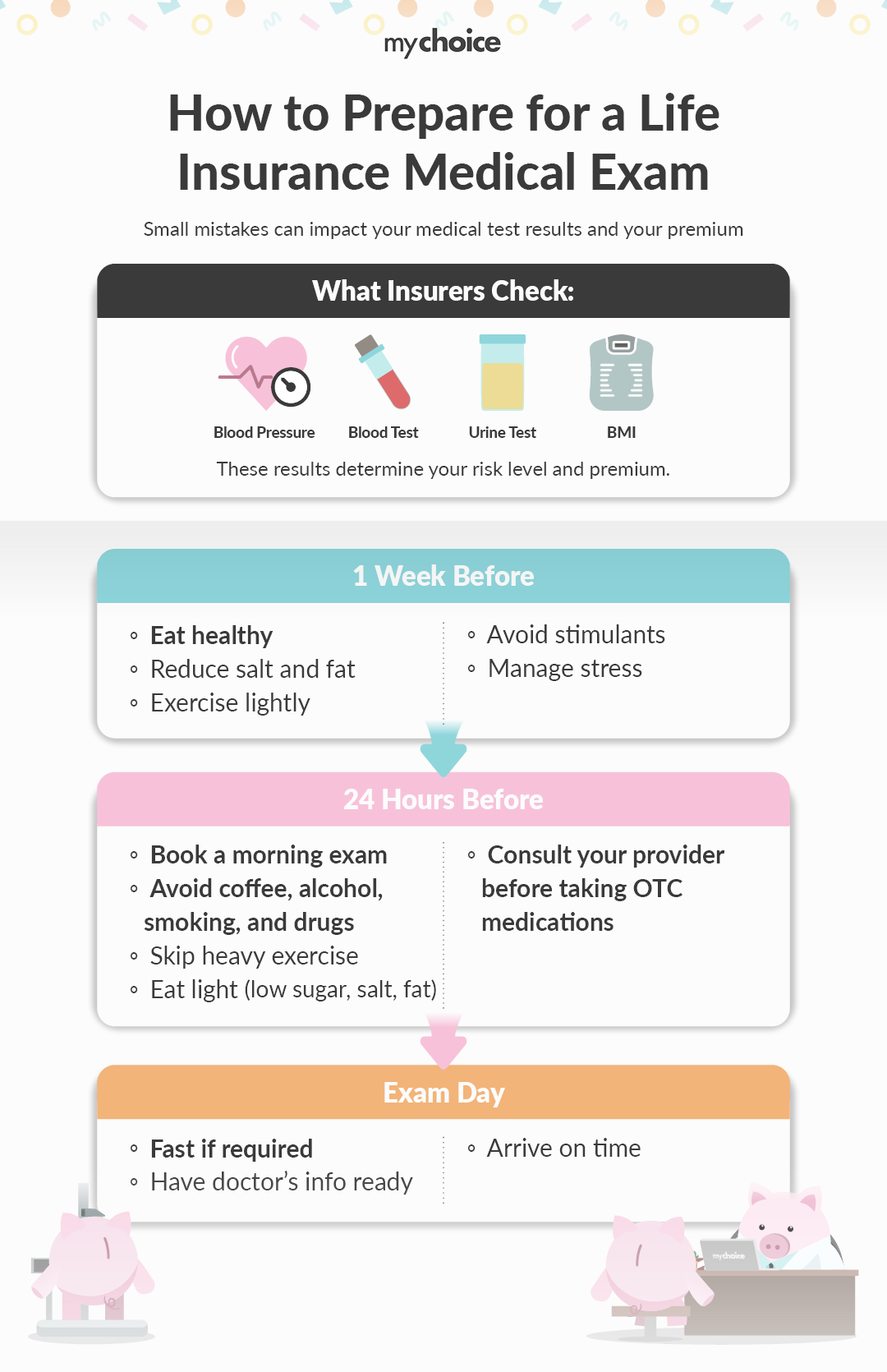
Confirm that you have done everything the examiner has directed you to do before the exam. Gather accurate information about your medical care, medications and health history.
Continue to receive any care you have been prescribed. Do not fast, stop medications or significantly change your normal healthcare regimen unless directed by your examiner or treating professional. The insurer needs an accurate picture of your normal health, not one artificially altered to prepare for the exam.
What to Expect from a Life Insurance Medical Exam
A nurse or paramedical professional arranged by the insurer may come to your home or office, or you may visit a clinic.
During the exam, they may:
- Discuss your health and any current or past medical conditions.
- Ask about the stability of those conditions, recent hospital stays, surgery or upcoming medical investigations.
- Discuss any prescriptions you’re taking, including the dose and how long you’ve been taking them.
- Ask about your family history, including cancer, heart disease, kidney disease or other hereditary conditions.
- Ask about smoking, alcohol or drug use, exercise habits and high-risk activities.
- Check your blood pressure.
- Record your weight and calculate your body mass index. Learn how BMI can affect your insurance rates.
- Obtain blood or urine samples if required.
A simple exam usually takes between 20 minutes and an hour. Sometimes an insurer will request a more detailed exam, which may include an EKG to measure your heart rate and rhythm.
Read More: See How Life Insurance Underwriting Works
Life Insurance Blood Test Preparation
Some tests require fasting. Check whether fasting is required and for how long. Alberta Precision Laboratories’ instructions for fasting tests say to eat nothing and drink only water for the specified period.
Take regular medications as directed unless your doctor gives other instructions. If you have diabetes, are pregnant, have an illness, take medication that must be taken with food or cannot fast safely, tell the examiner and your health professional before the appointment. Don’t change your eating or medication plan on your own.
Life-insurance examiners may follow different testing instructions. Always follow the instructions you receive for your appointment.
Have your doctors’ names and contact information available.
Read More: Read How Health Records Affect Life Insurance
Common Mistakes During a Life Insurance Medical Exam
Avoid these errors to ensure your medical goes as smoothly as possible:
- Over-indulging the night before. Eating a heavy, greasy meal can quickly skew cholesterol readings.
- Forgetting to stay hydrated. It’s important to drink water while fasting to ensure your kidneys are working well.
- Going for a morning run. Exercising is great. But don’t jog ahead of your medical exam.
- Doing the exam while fighting an infection. If you’ve got a cold or flu, make sure you reschedule your exam to ensure accurate readings.
- Not being honest. If you ‘forget’ to mention a history of cancer or that you’ve been a long-term smoker, you may be denied coverage or have your claim denied at a later time.
What Happens After the Exam?
Keep a copy of the application and other documents, including authorization forms, physical exam notices and any resulting insurance policy.
When the insurer reviews your application, it may approve your request, offer different coverage or premiums, request more information, postpone its decision or deny coverage.
If the insurer changes premiums, coverage, riders or exclusions, ask your agent or insurance company to explain the changes in writing before you accept the policy. Correct any errors immediately. If allowed, review the policy during its cancellation or review period.
Read More: See How to Respond to a Life Insurance Coverage Denial