









In Canada, there are legal protections for genetic test results. These protections do not remove your obligation to answer other medical questions on a life insurance application accurately. We’ve summarized what you need to know in the following guide.
We reviewed the Genetic Non-Discrimination Act, the Office of the Privacy Commissioner of Canada’s genetic-testing guidance, the Supreme Court of Canada’s case summary upholding the Act, and FCAC’s insurance-complaint guide.
Can Genetic Testing Affect Life Insurance?
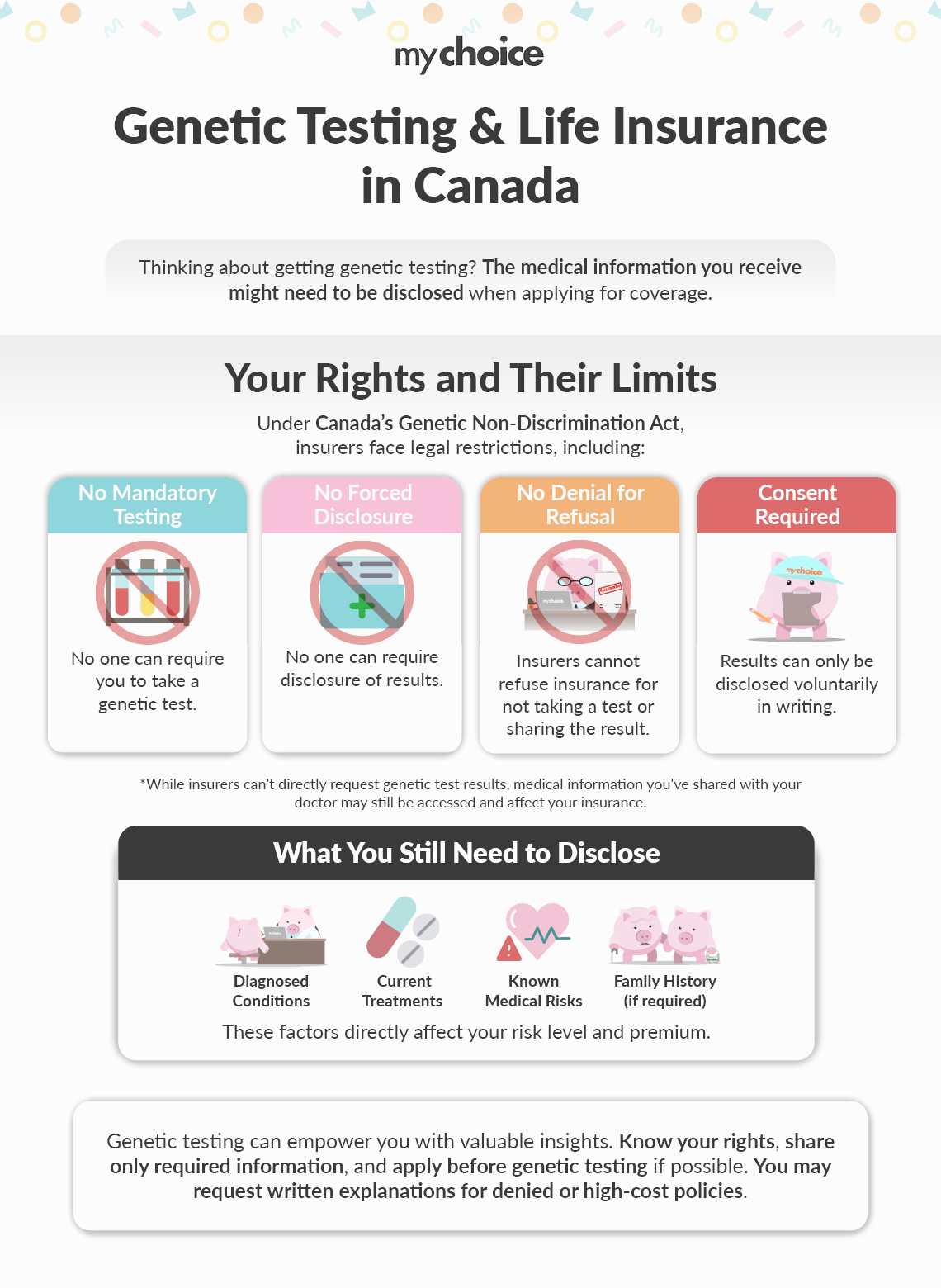
The Genetic Non-Discrimination Act prohibits insurers and other organizations from requiring you to undergo genetic testing or disclose genetic test results as a condition of providing services or entering into a contract. Violations can result in fines of up to $1 million or imprisonment.
The law says:
- No individual can be required to take a genetic test.
- No one can require the disclosure of genetic test results.
- An insurer cannot deny coverage solely because an applicant refused genetic testing or declined to share genetic test results.
- An insurer cannot collect, use or disclose genetic test results without the individual’s written consent.
What Medical Information Can Life Insurers Ask For?
Life insurers may ask for relevant health information during underwriting. They generally cannot require applicants to disclose genetic test results, regardless of policy size.
They may ask about:
- Your current state of health and lifestyle;
- The reasons you’ve visited a doctor recently;
- Your family’s medical history;
- Medical conditions you’ve been diagnosed with; and
- Treatments or medications you’re taking.
With your consent, insurers may request access to relevant medical records during underwriting. Diagnoses, symptoms and treatments contained in those records may affect the insurer’s decision.
Read More: Read How Health Records Affect Life Insurance
What Information Do You Need to Disclose?
Usually, you are expected to disclose relevant diagnoses, treatments, symptoms and material medical information requested during underwriting.
If you do not disclose requested information about your past or present medical history or treatment, that omission could constitute a material misrepresentation. This can lead to your application being denied or a later claim may be affected.
Read More: See How Life Insurance Underwriting Works
How to Protect Yourself When Applying for Life Insurance
It can be challenging to know what to share when applying for life insurance after genetic testing. Here’s what you can do:
- Know your rights. If anyone requests your genetic-test results or tries to require you to undergo genetic testing, you have the right to refuse.
- Focus on the questions. Answer the questions asked as directly and accurately as possible.
- Ask questions. If an insurer offers you a policy with a very high premium or rejects your application, ask for a written explanation.
- File a complaint. If you believe an insurer has mishandled your application, begin with the insurer’s complaint process. If your concern involves the collection, use or disclosure of genetic information, you may also contact the appropriate privacy commissioner.
You can also read our guide on how to prepare for a life insurance medical exam.