








Grease fires are a significant hazard in Canadian kitchens. Unattended cooking is one of the most common causes of house fires in the country.
We reviewed Health Canada’s cooking-safety guidance, Health Canada’s home fire-safety guide, the Department of National Defence’s kitchen fire-safety guidance, and the Canadian Forces Fire Marshal’s home fire-prevention booklet for this guide.
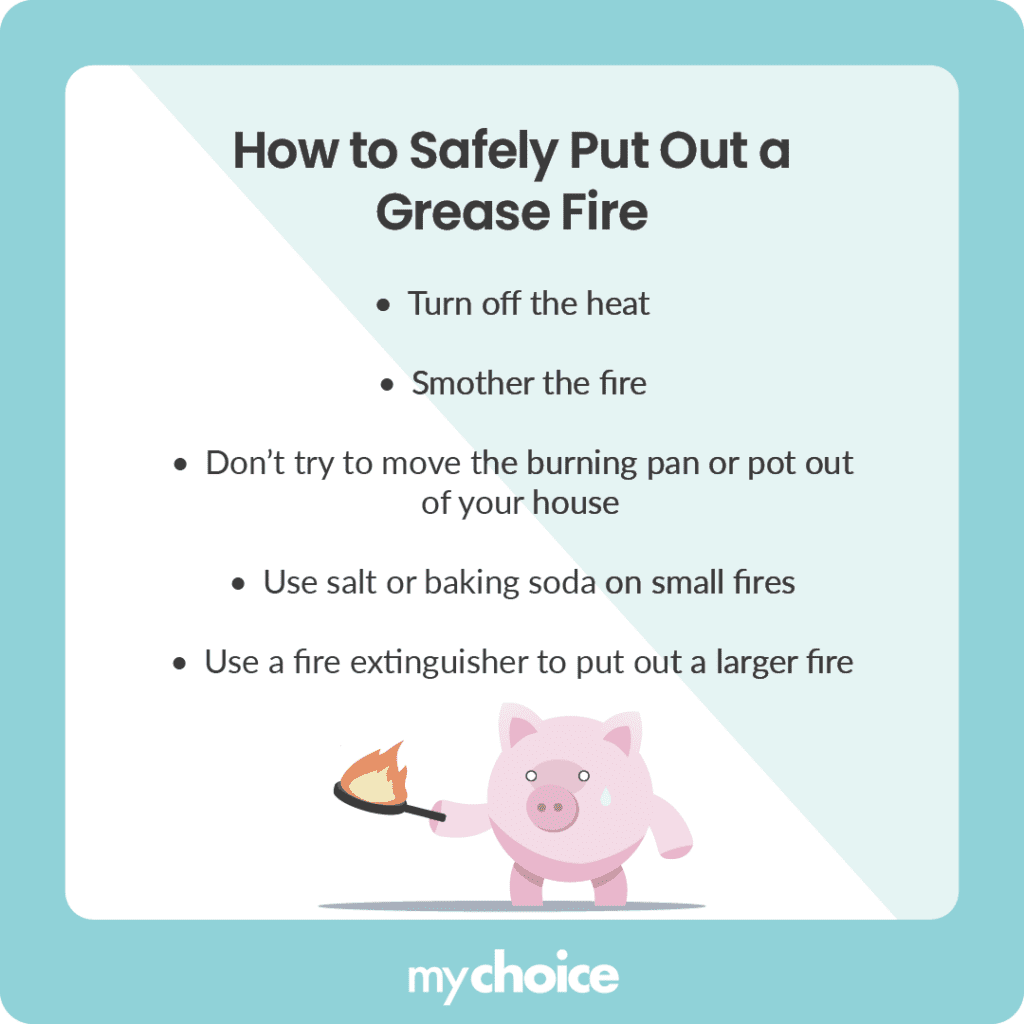
How to Safely Put Out a Grease Fire
Precautions are just one part of keeping your home and loved ones safe from grease fires. Knowing how to extinguish a grease fire safely is crucial. Here’s what to do when you’re facing this situation:
- 1. Turn off the heat: If it’s safe to do so, turn off your cooking burner immediately. This will keep the fire from getting bigger or spreading.
- 2. Smother the fire: Cover the flames with a metal lid or cooking sheet to keep oxygen in the air from supplying the fire. Oxygen feeds fires, and cutting off the supply will effectively extinguish small fires.
- 3. Don’t try to move the burning pan or pot out of your house: You might splash the ignited oil on yourself or other parts of your home, which may then catch fire.
When Can You Use a Fire Extinguisher?
Only attempt to put out the fire if someone has called for help; it’s small and contained; you know how to use an extinguisher; the label says it is suitable for cooking-oil or fat fires; and you have a clear exit behind you. If not, get out.
To use an extinguisher, follow PASS: pull the pin; aim at the base of the fire; squeeze the handle; and sweep from side to side. If the fire does not respond immediately, leave.
Class K extinguishers are intended for fires involving cooking oils and fats. Follow local fire-service advice and the directions on the extinguisher’s label.
Read More: Use the Fire Extinguisher Maintenance Checklist
What Not to Do During a Grease Fire
Knowing what not to do is just as important, so you can prevent a grease fire from spreading. Here are things you should take care to avoid:
- Don’t use water: While water works for some house fire situations, throwing water on a grease fire can cause burning oil to splatter. This may spread the flames further and make the situation worse.
- Avoid using flammable substances to put out the fire: Don’t use flammable materials like sugar or cloth to try to smother and put out the fire. The grease may spread on these materials and ignite them.
- Thaw food thoroughly before cooking: Don’t add frozen food to hot oil, as the thawing ice may make the oil spatter and ignite nearby flammable materials.
How to Prevent and Prepare for a Grease Fire
When cooking with oil, heat it slowly and use appropriate equipment for the volume and type of cooking. Self-regulating deep-fat fryers can reduce the risk of overheating if used according to the manufacturer’s instructions.
Make sure food is not overly wet or icy before carefully lowering it into hot fat. Keep pot handles turned in, not overhanging adjacent burners. Keep range hoods, cooktops and ovens free of grease.
Choose, inspect, maintain and replace fire extinguishers according to the manufacturer’s label. Keep the extinguisher near an escape route and away from the stove or other likely fire hazards.
Install smoke alarms inside bedrooms, outside sleeping areas and on every level of the home according to the manufacturer’s instructions and local codes. Test your smoke alarms regularly.
Decide on two ways to get out of the house in an emergency and where to meet outside. Practise the escape plan with your household.
Read More: How to Test Your Smoke Alarms
If Someone Is Burned
Stop the burning process. Get the person away from danger. If clothing catches fire, tell the person to stop, drop and roll.
The Canadian Forces Fire Marshal recommends placing burns under cool running water for five to ten minutes and getting medical attention. Don’t put ice, cream or butter on burns.
For serious burns or immediate danger, call 911.
After a Kitchen Fire
Only re-enter the property once the fire service has cleared it. Call your insurer as soon as possible. When it is safe, take photographs and keep receipts for emergency expenses.
The terms of the policy, the cause of the fire and the circumstances determine coverage.
Read More: Home Fire Insurance Claims Guide