









Our MyChoice team reviewed Statistics Canada’s National Fire Information Database methodology and Statistics Canada’s 2021 residential-fire summary. We also considered Health Canada’s home fire-safety guidance and Health Canada’s lithium-ion battery guidance.
This report explains what the available fire data show about residential fires from 2015 to 2021, what these data can’t tell us and what Health Canada’s current recommendations about smoke alarms and lithium-ion batteries mean for your home.
How Have Residential Fires Changed Across Canada?
The number of fires attended by fire services increased in each of the first two pandemic years in the seven reporting provinces and territories, representing approximately 60.4% of the population of Canada. The number of fires climbed to just over 39,000 in 2021 after increasing in both 2020 and 2021.
In 2021, 10,819 residential fires resulted in 156 residential-fire deaths. Residential fires remained the deadliest type, accounting for more than three-quarters of total fire-related deaths in 2021.
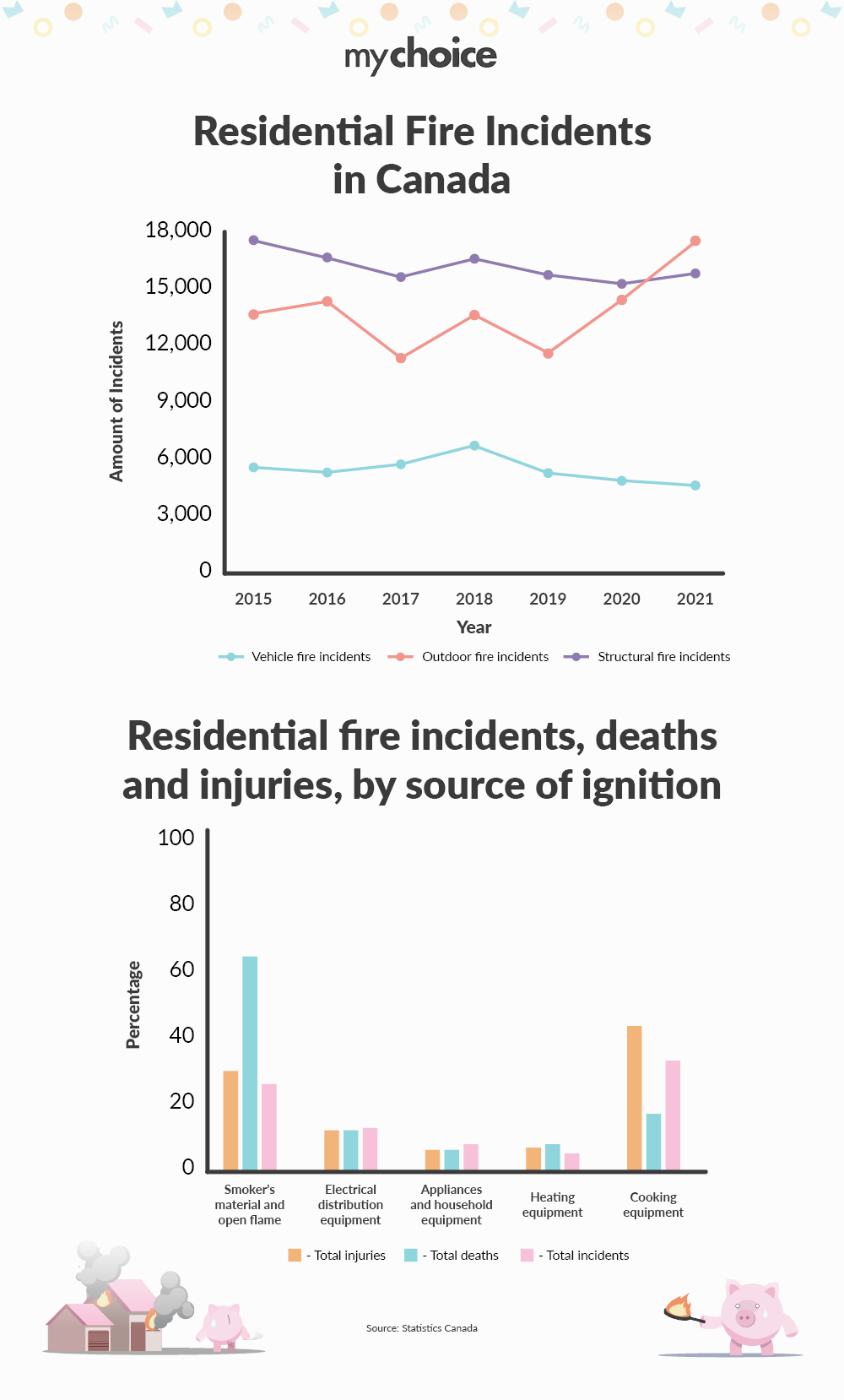
Common Residential Fire Ignition Sources
| Ignition source | 2017 incidents | 2021 incidents | Change |
|---|---|---|---|
| Cooking equipment | 2,714 | 2,299 | -15% |
| Heating equipment | 1,295 | 1,111 | -14% |
| Appliances | 662 | 590 | -11% |
| Electrical distribution | 1,302 | 1,231 | -5% |
| Other electrical | 521 | 441 | -15% |
| Smoking / open flame | 2,405 | 2,612 | +9% |
| Exposure fires | 599 | 1,190 | +99% |
| No igniting object | 163 | 123 | -24% |
| Unknown source | 6,182 | 6,389 | +3% |
The Smoke Alarm Gap
Smoke alarms provide early warning of fires. However, the presence or absence of a smoke alarm is unknown for 38% of reported residential fires.
Statistics Canada’s statement that nearly three-quarters of the people who died in residential fires were in homes with no alarm installed includes those whose alarm status is not known. That doesn’t necessarily mean nearly three-quarters didn’t have working smoke alarms.
| Alarm status in reported residential incidents | Share of incidents |
|---|---|
| Working alarm | 37% |
| Failed to activate | 12% |
| No alarm installed | 13% |
| Unknown | 38% |
Read More: Use the Smoke-Detector Testing Guide
Lithium-Ion Batteries Are A Current Safety Risk
Lithium-ion batteries are generally safe when used as intended. A damaged, modified, defective or overcharged lithium-ion battery can overheat, catch fire or explode. Do not use a battery if it is hot to the touch, bulges or swells, is dented, leaks, changes colour, makes a hissing sound or smells strange.
Use only the charger supplied or approved for the device, and buy products certified to meet Canadian electrical safety standards. Charge in an area you can monitor and away from bedding, carpeting, couches, doorways or any place that could block an exit. Never leave devices charging while you are asleep. Do not use a cracked or damaged charger. Never alter a battery. Dispose of batteries according to local hazardous-waste regulations.
Read More: Read About EV Battery Fires and Home Insurance
What You Can Do At Home
| Action | How to do it safely |
|---|---|
| Smoke alarms | Have them in each bedroom, on all levels of a home and outside sleeping areas; test them monthly; replace them if they are more than 10 years old. |
| Escape plan | Develop an escape plan. Identify two ways out when possible. Choose a place outside to meet, and make sure everyone in the household practices the escape plan. |
| Cooking | Never leave cooking unattended. Keep combustibles away from the cooking area. Never throw water on a grease fire. |
| Smoking | If you must smoke, do so outside. Use sturdy, deep ashtrays when smoking. Never smoke in bed. |
| Extinguisher | Keep the fire extinguisher away from a potential fire, but close to an exit. Make sure you have a clear escape path. Only use it if flames are small and contained. |
| Electrical and battery equipment | Use only equipment with certification marks. Follow the operating instructions provided by the manufacturer. Have damaged equipment repaired by a qualified repairer. |
Read More: Use the Fire-Extinguisher Maintenance Checklist
What This Means For Home Insurance
Check your policy’s dwelling limit, settlement basis, contents limits and additional living expense coverage.
Let your insurer know about material renovations, as well as any change in occupancy.
Ask them what proof of a monitored alarm they require for a discount.
Read More: Review Home Fire Insurance Coverage and Claim Steps