









Whether it’s to make improvements, add accessibility, or simply for fun, there are plenty of good reasons to modify a car. Before you start, though, it’s important to know that making any modifications to your car may have insurance implications. These could be serious depending on the nature of the change and your insurer’s underwriting rules. Here’s what you need to know.
What Counts as Modifying a Vehicle?
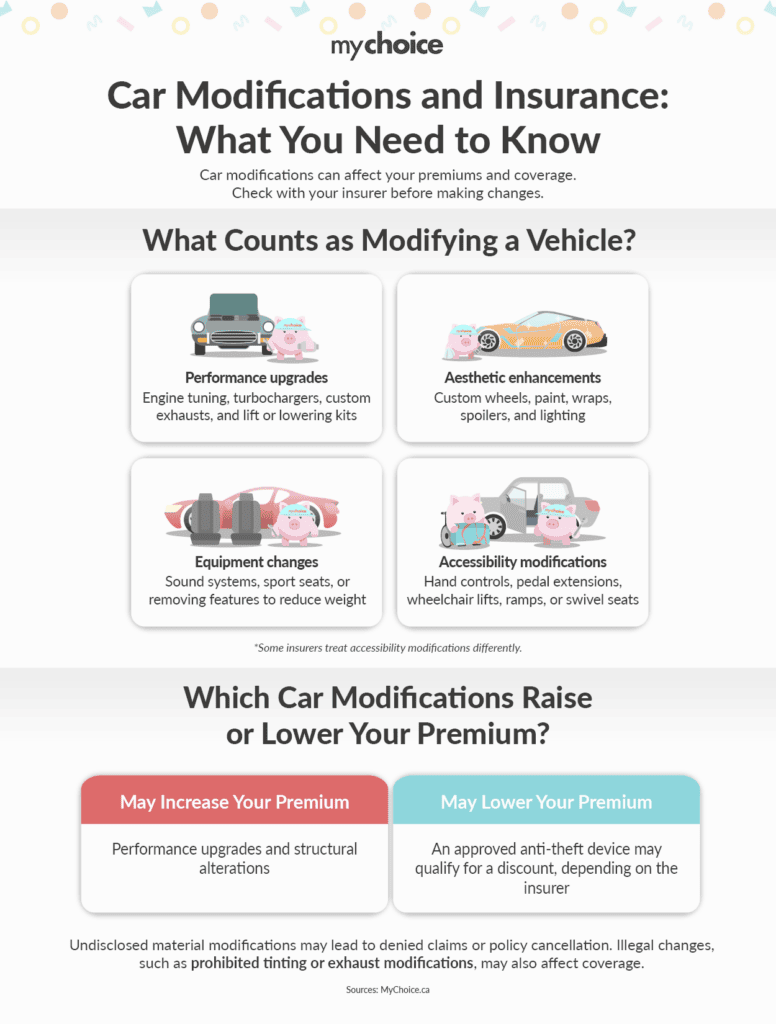
For insurance purposes, a modification is considered any material change to your vehicle that alters it from the factory specifications. This includes but is not limited to:
- Performance upgrades such as engine tuning, turbochargers and superchargers, cold air intakes, aftermarket exhausts, and suspension lowering or lift kits;
- Aesthetic enhancements such as premium wheels, custom paint jobs, wraps, spoilers, and aftermarket lighting;
- Equipment changes such as adding sound systems or sport seats, or removing features for lightweighting;
- Accessibility modifications such as steering wheel hand controls, reduced effort steering devices, pedal extensions or alterations, wheelchair lifts or ramps, or swivel seats. (Some insurers categorize accessibility adjustments differently from other modifications.)
In short, if a change to your car makes it materially different from when you drove it off the dealership lot, it may count as a modification.
Why Does Modifying Your Car Affect Your Insurance Premium?
From the insurer’s perspective, many automotive modifications change the risk profile. Performance alterations can make incidents more likely, and high-value aftermarket parts may increase the value of your car and make it more appealing to thieves. Your insurer will want to verify that your coverage addresses these new risks. You may also need to add the value of expensive equipment to your policy as an endorsement.
Read More: How Car Insurance Premiums are Calculated
Which Modifications Are Likely to Affect Your Insurance Premium the Most?
Every insurer has different guidelines around modifications, and there’s no set formula for which changes increase premiums the most or how much they may go up. In general, though, most insurers consider performance upgrades and those that alter the vehicle’s structure in any way to bring the highest risk, which typically means the highest premium increase.
There are also some modifications that could decrease your insurance premium. For example, some insurers may provide a discount if you install an approved anti-theft device. It’s worth contacting your insurer when considering these changes as well.
What Happens If You Don’t Tell Your Insurer About Your Modifications?
If you submit a claim and it’s discovered that you failed to disclose material vehicle modifications to your insurer, the claim could be denied. Your insurer may also cancel your policy, which could make it more difficult to secure insurance as you may need to disclose cancelled policies to other potential insurers.
Talk to Your Insurer Before Making Any Modifications
If your insurer decides that your car’s modifications make insuring it too risky, your policy could be terminated, subject to provincial rules. Changes that are illegal in your jurisdiction may also affect your coverage. Depending on where you live, these could include excessive window tinting, exhausts that exceed noise regulations, and more. It’s far easier to talk to your insurer before making modifications than to deal with a skyrocketing premium or undoing the changes later. Take the time to make a phone call to avoid unpleasant surprises down the road.