









There are different ways to describe the legal form of a Canadian or U.S. business, which matters when setting up a business account, registering a business, signing contracts, and applying for business insurance. For example, Canada typically doesn’t set up businesses as limited liability companies (LLCs).
To learn more, our editorial team compiled information from CRA’s guide to setting up a business, CRA’s registration guidance for non-resident businesses, the Government of Canada’s business-registration guide, and the Insurance Bureau of Canada’s business-coverage guide.
How a U.S. LLC Can Get Business Insurance for Canadian Operations
Can a U.S.-formed LLC apply for commercial insurance in Canada? It may be able to. The insurer will want to know where it is formed in the U.S., any registrations it has in Canada, the provinces in which it operates, who owns it, and what kind of business it is.
Businesses formed in Canada should identify their actual legal structure when applying for insurance, such as a corporation, partnership or sole proprietorship.
Obtaining insurance does not form an entity or determine how it will be taxed in Canada. Check with the CRA, the relevant registry, and qualified legal and tax advisers.
Read More: Explore Business Insurance Options
Read More: Read the U.S. Expansion Insurance Guide for a Canadian-Owned LLC
Does a U.S. LLC Need Business Insurance in Canada?
Read all agreements carefully before determining what kind of insurance to get. Clients may require commercial general liability or errors and omissions insurance. Commercial leases may require liability and property insurance, while lenders may require insurance on financed assets. Some insurance, such as auto coverage and workers’ compensation, is regulated at the provincial level.
Determine who is considered an insured, what activities are insured, deductibles, geographic territory, aggregate limits, additional-insured language, certificate provisions, deadlines and notice requirements. Certificates of insurance do not change coverage; they describe what is covered.
How Much Does Business Insurance for an LLC Cost in Canada?
It’s hard to provide an average business insurance quote for an LLC in Canada, since pricing depends on your specific situation and business needs. The best way to find out the price is to get a quote.
When getting a quote, the insurer may ask you for details about:
- your operations, products, agreements and work performed by others;
- your employees, customers, revenue, payroll and years in business;
- where the business operates;
- business property and vehicles;
- the limits and deductibles you want; and
- previous insurance, claims, incidents and cancellations.
Common Coverage Categories to Review
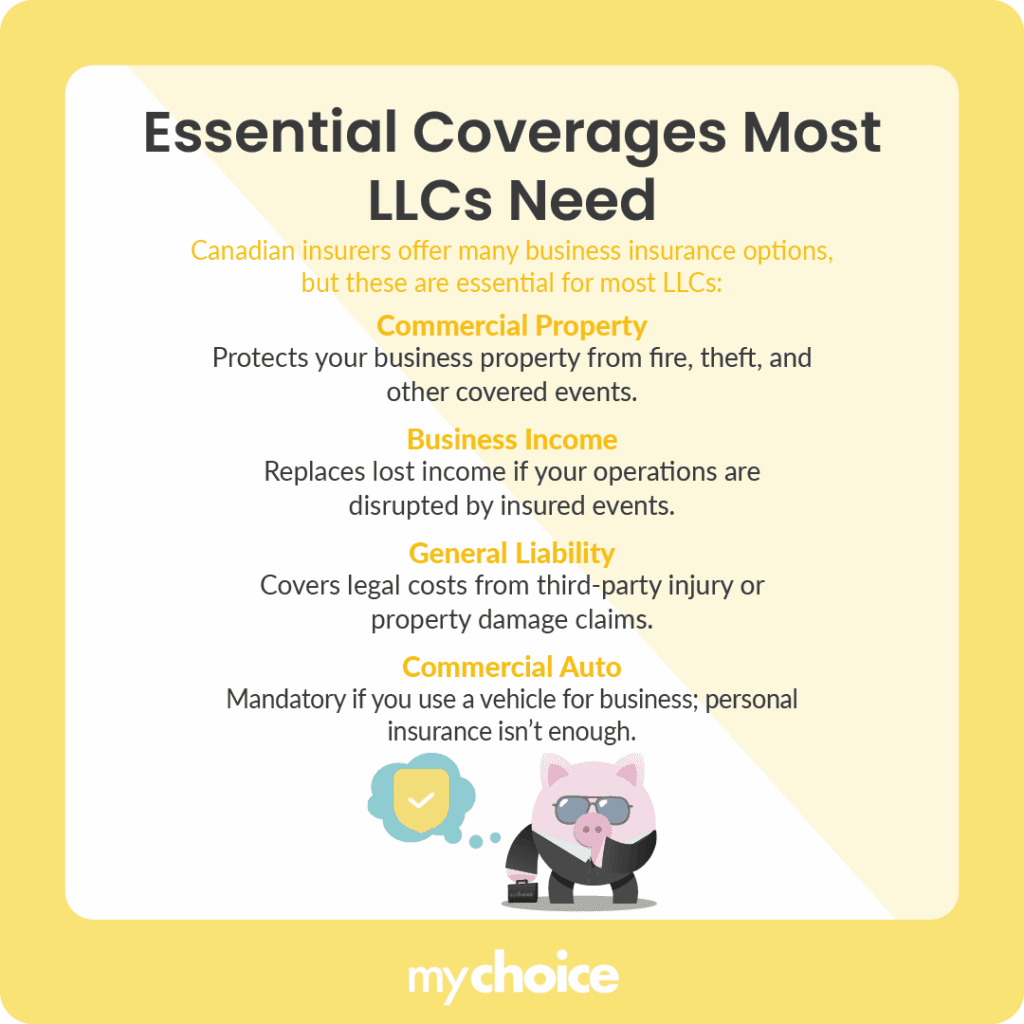
The coverage required depends on the business and its risks. Common categories include:
- commercial general liability for injury or damage to someone else;
- property coverage for buildings, stock or equipment;
- business interruption coverage following insured damage;
- errors and omissions insurance for advice or professional services;
- cyber insurance for customer or employee data;
- product liability and recall coverage;
- commercial automobile insurance; and
- directors and officers liability, employment-practices liability and provincial workers’ compensation.
Read More: See How a Business Owner’s Policy Works
What Happens If You Don’t Have Insurance?
Without proper insurance, the business may have to pay its own legal costs, settlements, property damage, lost profits or damages for breaking a contract. It may also lose leases, lines of credit or contracts that require proof of insurance.
Corporate or other structures do not protect against business losses. They do not absolve owners from having to honour a personal guarantee or protect an individual from being sued for their own actions.
Read More: Review Startup Insurance Needs for a Canadian-Owned U.S. LLC