









Canadian business owners often wear multiple hats. They can act as operators, marketers, and risk managers, all at the same time. Getting your business protected is an underrated cornerstone of success, but getting insurance can sometimes be a headache, especially when you have to get separate policies for different parts of your business. Instead of juggling confusing clauses and overlapping coverages, you might consider a Business Owner’s Policy (BOP) as a strategic safeguard.
Why “All-in-One” Insurance Isn’t a Cliché Anymore
Many Canadian entrepreneurs may mistakenly believe that all-in-one insurance packages are generic. However, A BOP may package specified property, liability and business-income coverages, but separate policies or endorsements may still be required.
They combine essential business protections, sometimes at reduced premiums, allowing businesses to allocate resources to other critical areas.
The Hidden Power of a Business Owner’s Policy
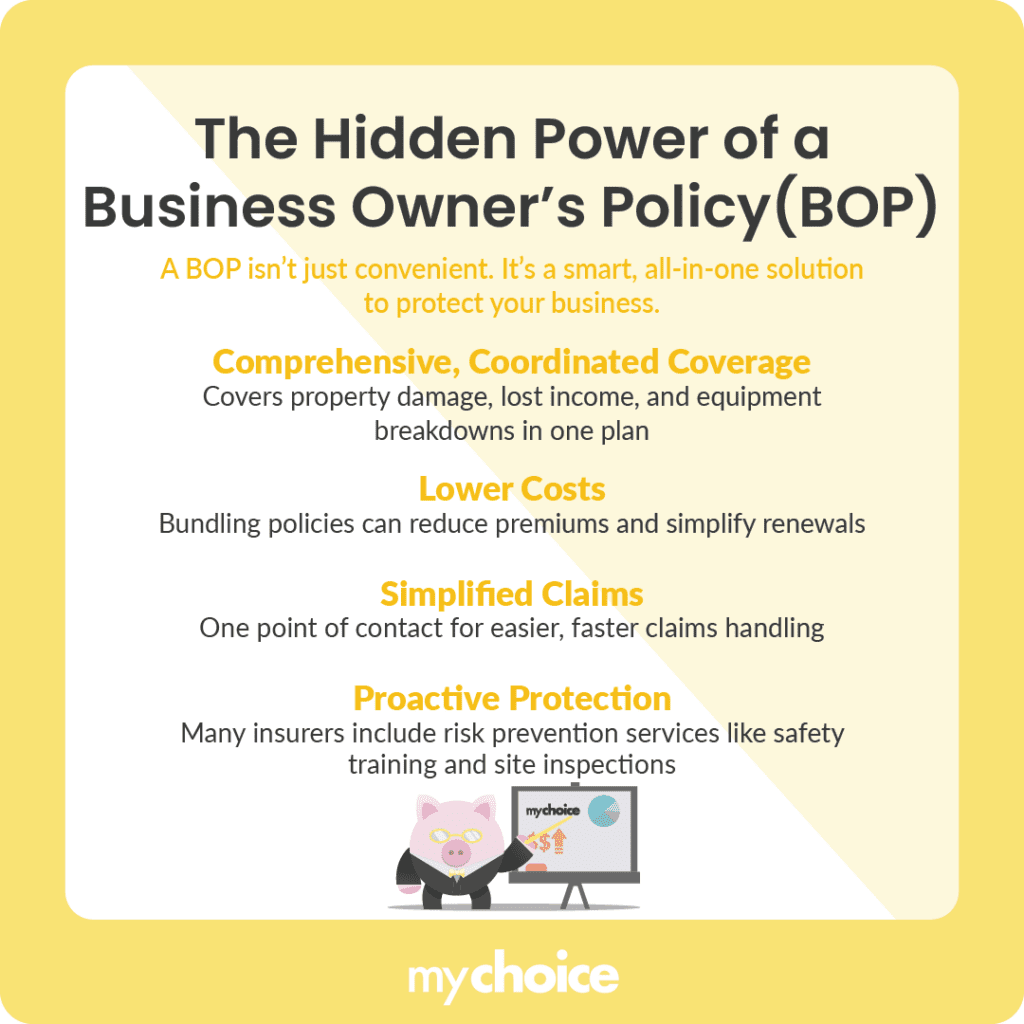
Coverage That Works Together
BOP coverages can complement each other. Consider this example: a fire damages your retail shop, and the commercial property insurance aspect of your BOP can cover the physical damage. Business interruption insurance may also replace lost income while your store undergoes repairs.
Lower Total Premiums and Policy Fees
Instead of purchasing separate policies, investing in a single BOP can lower overall premiums. Some Canadian insurers offer bundle discounts, leading to cost efficiencies and simplified renewals for small and mid-sized businesses.
Which Businesses Need a BOP?
A BOP can benefit a small to mid-sized business facing property and liability risks. It may be appropriate for your business if you have a physical location, customer foot traffic, and equipment or assets to protect. Here are some business types that may benefit from a BOP:
Retail businesses
Clothing stores, florists, pet supply stores and hardware stores requiring protection for inventory, commercial spaces and daily customer interactions.
Professional services
Accountants, IT service providers, real estate agents and marketing consultants with potential liability risks and business interruptions.
Hospitality and food services
Cafes, restaurants, bakeries and food trucks with equipment, staff and customer traffic.
Trades and contractors
Electricians, plumbers, landscapers and HVAC technicians with specialized tools and work performed on client property.
You may not need a BOP if you run a large corporation requiring a custom commercial insurance package or a business with a complex risk profile, such as a financial institution or mining company.
What’s Included in a Modern BOP?
BOPs are customizable and may include core coverage sets. However, inclusions vary among insurers.
Standard coverages may include:
- Business interruption insurance: Replaces lost income and certain operating expenses if your business closes temporarily after a covered loss.
- Commercial property insurance: Covers physical assets against covered losses such as fire, theft or vandalism. It can provide financial support for repairing or replacing your building, inventory, equipment and fixtures.
- General liability insurance: Protects against third-party claims for bodily injury or property damage. For instance, it may respond if a client has a slip-and-fall accident or your business causes damage to customer property.
Optional coverages may include:
- Cyber liability insurance: May cover data breaches, cyber extortion, system restoration and certain legal expenses.
- Equipment breakdown insurance: Protects against covered mechanical or electrical failures involving business equipment. Coverage may include repair costs, lost revenue or spoilage.
- Crime insurance: Covers certain losses involving theft, fraud or employee dishonesty.
- Professional liability insurance: Covers allegations of negligence or failure to deliver promised professional services.
You can tailor a BOP based on your business size, location, industry and risk profile.
Bottom Line
- Audit your risks annually. Consider whether you’re opening new locations, relying more heavily on technology or facing new cybersecurity risks.
- Work with a broker to tailor the policy to your business needs and identify potential coverage gaps.
- Review your policy whenever your business experiences a significant change. Your risk profile may change, so your insurance may need to change with it.