







Out-of-pocket expenses for cancer patients are expected to increase by 20.35% in the next decade
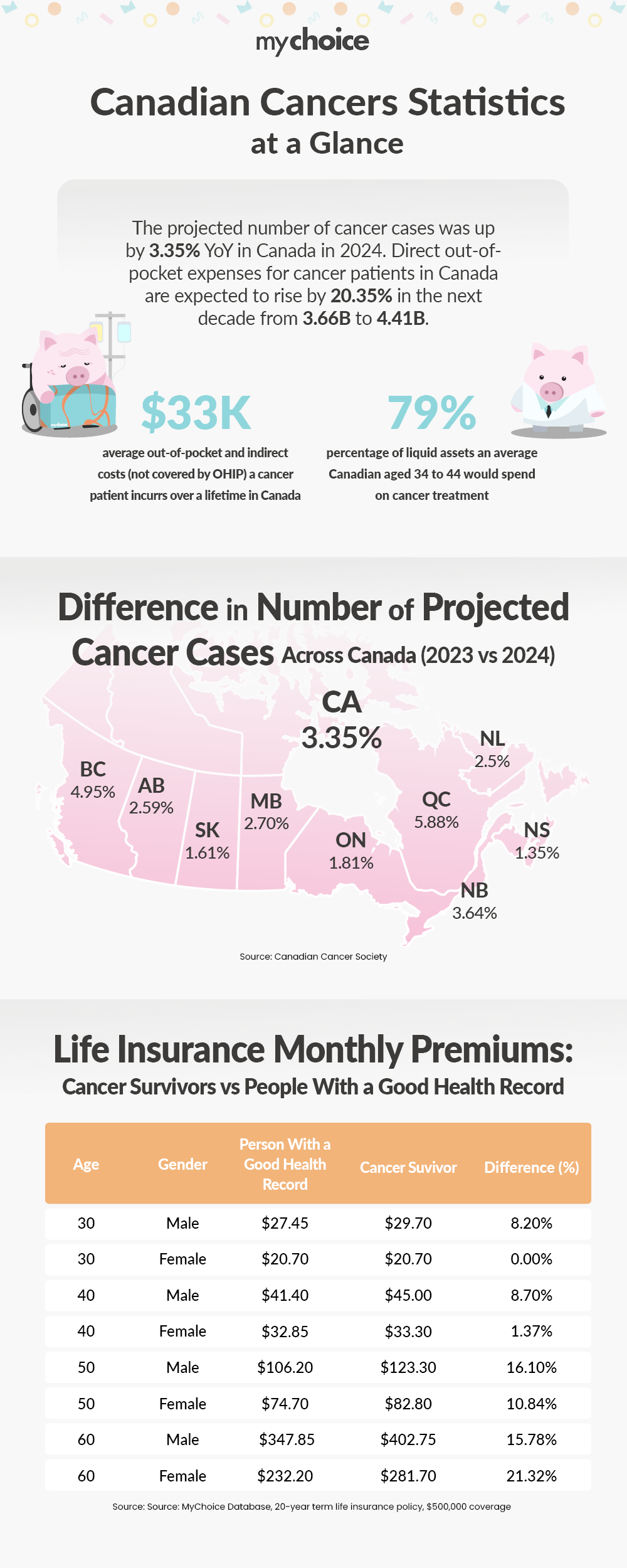
Cancer continues to pose a significant challenge for Canada and its healthcare system. The Canadian Cancer Society reports that the projected number of cancer cases in 2024 increased by 3.35% compared to the data from 2023. The total societal cost of cancer in Canada is estimated to be $37.7 billion, with almost 80%, or $30.2 billion, being covered by the federal healthcare system. However, cancer patients and their families are still expected to cover the remaining 20%, which amounts to $7.5 billion.
A recent survey by the Canadian Partnership Against Cancer revealed that 40% of cancer survivors in Canada have concerns about obtaining life insurance. In response, our team at MyChoice, a leading Insurtech company in Canada, conducted a study to examine the seriousness of this trend and to provide clarity for cancer patients exploring life insurance options.
Some of the key findings from the study include:
- According to MyChoice data, cancer survivors are charged 10.29% more for life insurance in Canada at MyChoice than people with a good health history.
- The average cancer patient faces nearly $33,000 in out-of-pocket expenses (not covered by OHIP) and lost income during their treatment and recovery. This represents approximately 79% of all liquid assets that an average Canadian aged 35 to 44 has, excluding their pension assets.
- The direct out-of-pocket expenses incurred by cancer patients are expected to increase by 20.35% over the next decade, going up from $3.66 billion to $4.41 billion. The costs include expenses for transportation, travel, lodging, medications, vitamins, supplements, equipment, devices, professional homecare, caregiving, and medical visits.
- Cancer patients can still obtain life insurance, although they might face limited options and higher premiums. Options like guaranteed issue life insurance and simplified issue life insurance do not require a medical exam during the application process, which can be advantageous for cancer patients.
- Projected cases of cancer in 2024 are up 3.35% in Canada. Some of the biggest increases occurred in Quebec, up 5.88%, British Columbia, up 4.95%, and New Brunswick, up 3.64%.
Matthew Roberts, COO of MyChoice, shares his perspective on the role of life insurance in financial planning: “Life Insurance can help mitigate some of the out-of-pocket expenses that will come with cancer treatment. If you’re diagnosed with cancer after purchasing a life insurance policy, your coverage will remain active as long as you continue to pay your premiums. The insurer cannot cancel or increase your premiums because of the diagnosis. This underscores the importance of obtaining life insurance while you’re young.”
If you own a life insurance policy upon your cancer diagnosis, your policy can offer financial support to you and your family in several ways:
Critical Illness Insurance:
This insurance type pays out a lump sum upon the diagnosis of a covered condition, including certain types of cancer, which can help cover treatment costs and living expenses.
Accessing Cash Value of Your Policy
Some life insurance policies, such as whole life or universal life, accumulate cash value, which can be borrowed against or withdrawn to help with expenses during treatment.
Accelerated Death Benefit (ADB) Riders:
Some riders allow policyholders to receive some of the policy’s death benefit while still living if they are diagnosed with a terminal illness.
Navigating life insurance with a history of cancer requires a nuanced approach. Despite the challenges, the availability of diverse insurance options, from guaranteed issue to term life and critical illness insurance, ensures that financial security is attainable. It’s all about finding the right fit, and our goal is to illuminate that path.
Below is a summary of insurance options people have after being diagnosed with cancer.
| Policy Type | Eligibility/Criteria | Max Coverage Amount | Premiums | Medical Exam/Questionnaire |
|---|---|---|---|---|
| Guaranteed Issue Life Insurance | – Currently diagnosed with cancer – Recent remission | $25K – $50K | High | Not Required |
| Simplified Issue Life Insurance (No Medical) | – Some health issues but not severe – May be declined for term life | Up to $500K | Medium | Not Required |
| Term Life Insurance (for Survivors) | – Remission for 2+ years (varies by insurer) – Good overall health | Up to $5M | Low | Required |
| Group Life Insurance (through employer) | – Currently employed | Varies (often based on salary) | Varies | Typically none |
Canada has made significant progress in cancer care from 2021 through 2024, with new strides in early detection and treatment. Screening programs have expanded drastically in the last few years on the early detection front. According to the Canadian Partnership Against Cancer organization, Canada is implementing lung cancer screening for high-risk individuals nationwide, and cervical screening is shifting from Pap tests to more sensitive HPV-based testing, aligned with the national goal to eliminate cervical cancer by 2040. At the same time, treatment innovations such as immunotherapy are improving patient outcomes – for example, advanced melanoma survival rates have dramatically increased (from around 20% one-year survival to 50% ten-year survival) thanks to immune-based therapies, and Canadian-led trials have shown that adding immunotherapy before surgery can boost cure rates in cancers like bladder cancer.